
Guide
How Coppell's Heat and Older Seals Wear Down Your Garage Door
Coppell's housing runs 1959-2014, mostly 1980s-90s stock, sitting in a moderate-heat band that dries out weather seals and draughts faster than owners expect. Here's what that means for your door.
Local detail
What the Weather Here Does to It
Coppell sits in a moderate-heat climate band, not the punishing stretch you'd get further south or west, but enough sustained warmth most years to work on rubber and vinyl weather seals every single day. It's not one bad storm that gets you here. It's the slow bake - the seal along the bottom panel and the flexible strip between panels drying out, shrinking, and pulling away from the frame a little more each summer. Once that gap opens, you get weather seals and draughts, along with the fine grit that rides in on the wind and works its way into the track and rollers.
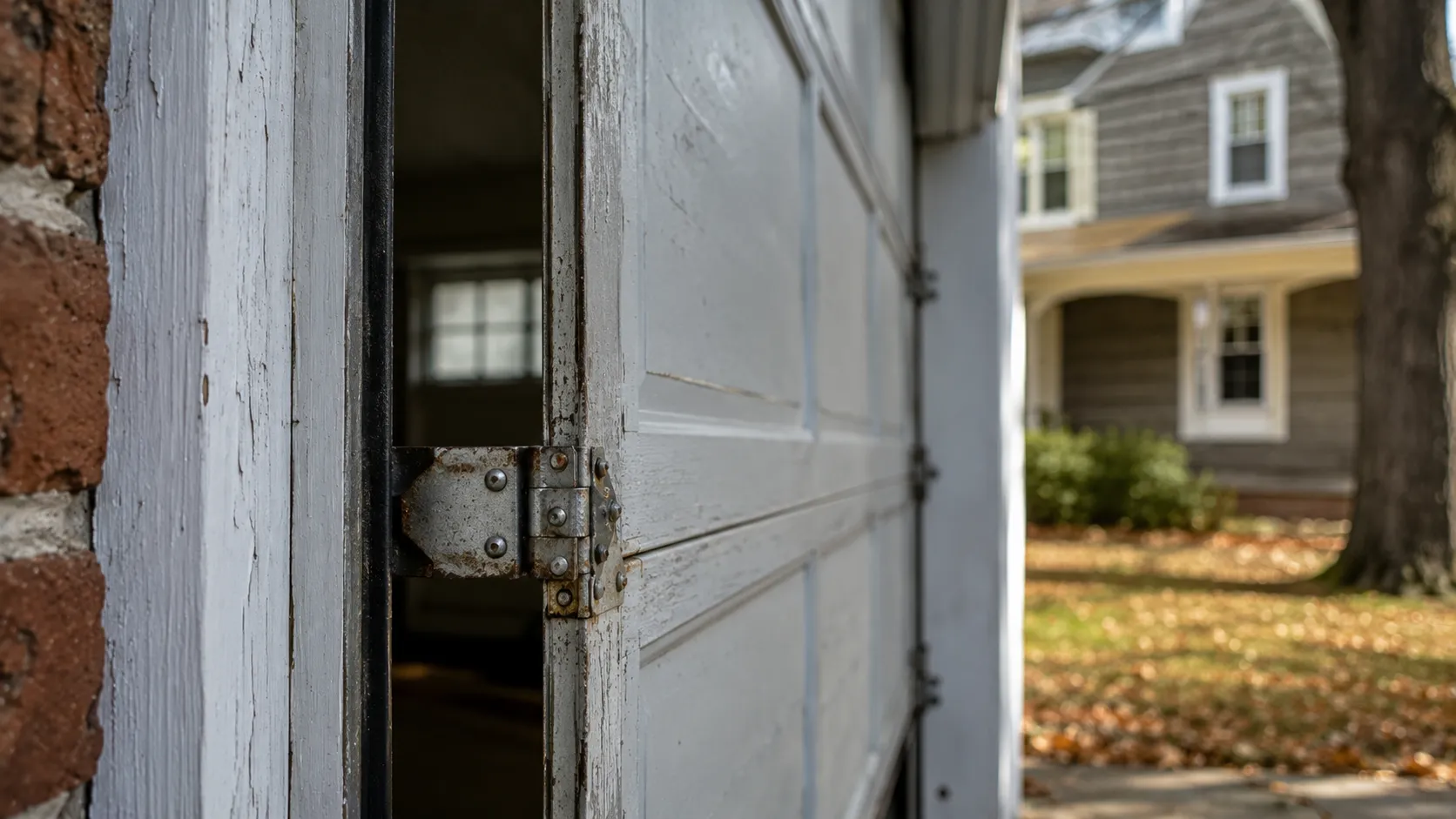
Houses built in this area between 1959 and 2014, with most dating to the 1980s and 90s, were fitted with seal材料 and hardware that wasn't built to last thirty-plus summers. If your door still has its original bottom seal and it's stiff, cracked, or pulling loose at the corners, that's not a defect - that's just what this climate does to rubber over enough years. The fix is usually a seal swap and a track check, not a new door, unless the panel underneath has started to warp from the same heat cycling.
The area
Season by Season
Summer is the long grind here - the heat doesn't spike and break like it does elsewhere, it just sits, and that steady warmth is what cracks a seal faster than any single hot day would. You'll notice it first as a thin line of daylight at the bottom corners of the door, or a draft you can feel standing next to it in the garage. Fall and winter bring the temperature swings that finish the job - the same rubber that baked all summer now contracts overnight, and a seal that was merely stiff becomes a seal with a permanent gap. Spring is when most people finally call, because that's when the draughts start carrying pollen and dust into the garage along with the air.
None of this is dramatic weather. It's Coppell's steady moderate-heat pattern doing ordinary, cumulative damage to seals that were never rated for three decades of it. If your door was installed anywhere near the median build year of 1999, the original seal has already outlived its expected working life by a wide margin, heat band or not.
What we find
The Situation
Across this service area - 22 named communities spanning roughly Farmers Branch at 7 miles out to Cross Roads and Paloma Creek near 18 - the housing stock leans heavily toward 1980s and 90s construction, with the overall build window running 1959 to 2014. That means a lot of doors installed on the same schedule, aging on the same schedule, in the same heat band. Valley Ranch, just 3 miles southeast, sits close enough that it's dealing with the identical climate wear on the identical era of hardware.
With 87,582 households and 55,758 owner-occupied houses in the area, and a median household income of $146,314, most of what we see isn't neglect - it's homeowners who'd rather replace a worn seal or a tired opener than let a small problem sit. That income level also means when a door does need full replacement instead of a repair, most owners can make that call without agonizing over it. The pattern we actually see on calls: original seals from the 80s and 90s build boom, still on the door, finally giving up after two or three decades of steady heat cycling.
How we work
The Common Mistake
The mistake we see most is treating a draughty seal as a caulk-and-forget job. Someone runs a bead of sealant along the bottom of the door, it holds for a season, and then the gap reopens somewhere else because the seal material itself has shrunk - caulk can't fix that, it just hides it for a while. The other common mistake is assuming a draught means the door is failing structurally, when nine times out of ten it's just the weather seal doing exactly what thirty years of Coppell heat cycling will do to rubber.
We'll say plainly: we don't stock every profile of seal for every era of door on the truck, and on older 1980s-vintage doors the exact replacement gasket sometimes has to be special-ordered, which can add a few days to the job. That's a real limitation, not a sales pitch - if your door is that old, ask about lead time before you commit to a repair date. Swapping the seal is usually worth it before the panel itself starts to warp from repeated heat exposure; once that happens, you're looking at replacement instead of repair.
Questions
Common questions
Why does my garage door let in more draft in summer than winter?
It's usually the opposite of what people expect - the seal actually degrades most during the long stretches of steady heat, then the gap becomes obvious once temperatures swing in fall and winter and the shrunk rubber contracts further. By the time you notice the draught, the damage happened months earlier.
Is a cracked seal something I can just caulk over?
Caulk can buy you a season, but it doesn't fix a seal that's shrunk from heat exposure - the gap reopens once the caulk itself cracks. If your seal is from the original 1980s or 90s install, replacing the seal itself is the actual fix.
My house was built in the late 1990s - is my door original?
It's possible. The median build year across this area is 1999, and a lot of that stock still has original hardware and seals. If yours hasn't been touched since installation, the seal has likely already outlived its expected life for this climate.
How fast can you get an older door's seal replaced?
Standard seal profiles are usually quick. On some 1980s-era doors the exact gasket size has to be special-ordered, which can add a few days - we'll tell you upfront if your door falls into that category before scheduling the job.
Ready when you are
Need a garage door sorted in Coppell?
Coppell Garage Door Co repairs and installs garage doors, springs and openers in Coppell, TX and the surrounding area.