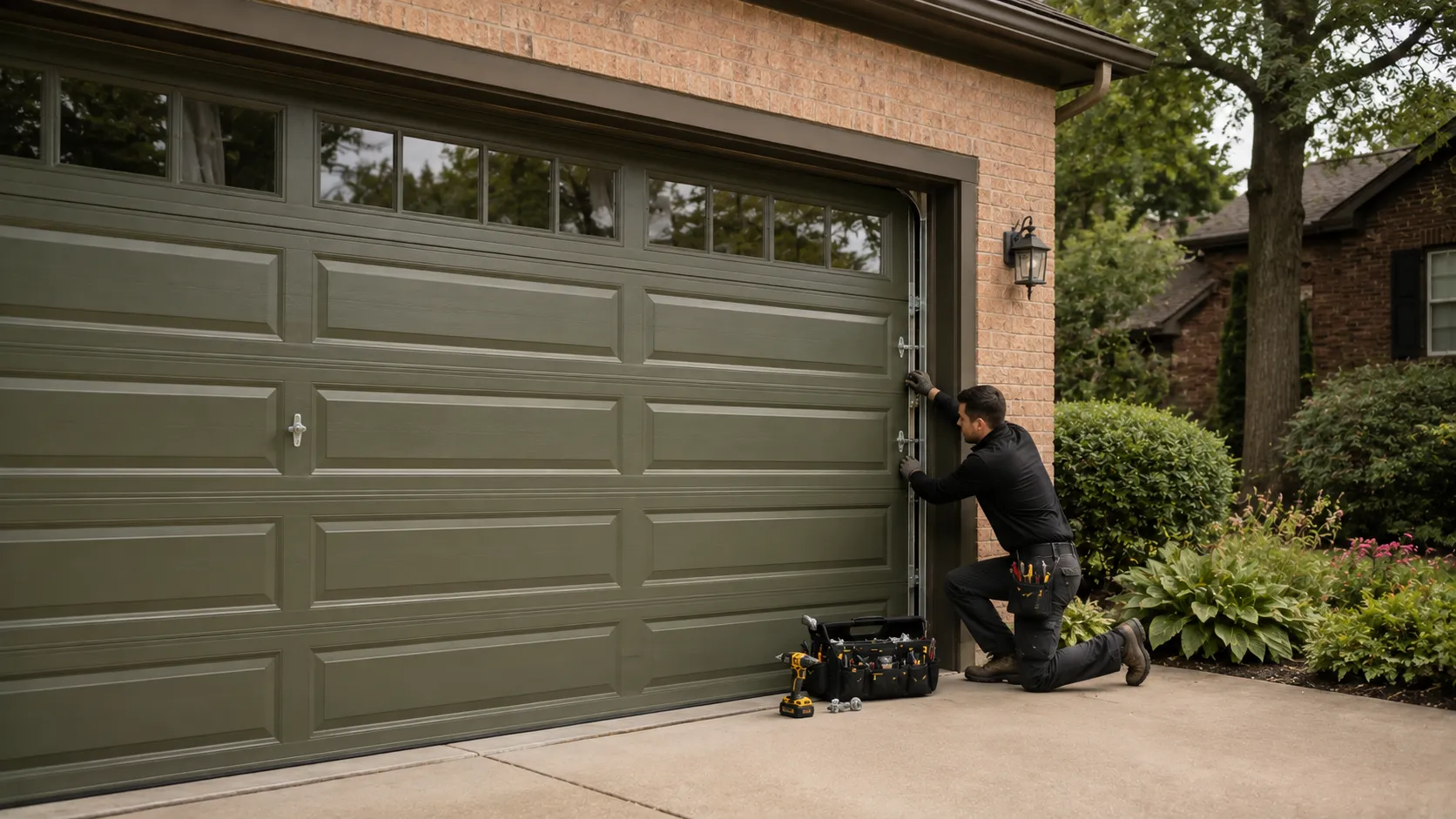
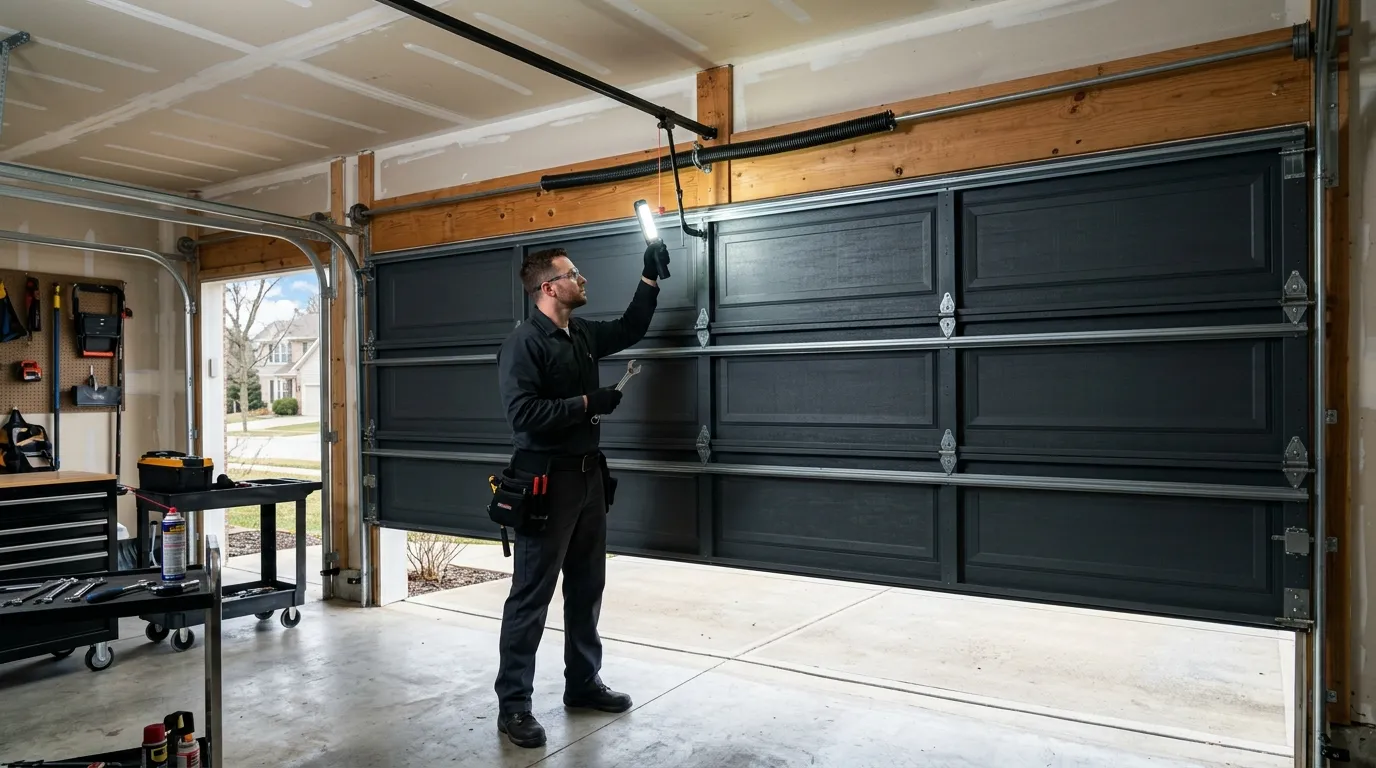
Broken Torsion Springs
Aging torsion springs on older two-car doors are one of the most common failures across the service area.
LOCAL GARAGE DOOR SERVICE • COPPELL, TX
Garage door repair for Coppell homes built largely through the 1980s and 90s, plus surrounding communities from Farmers Branch and Valley Ranch out toward Argyle, Northlake, Cross Roads, and Paloma Creek.
GARAGE DOOR SERVICES
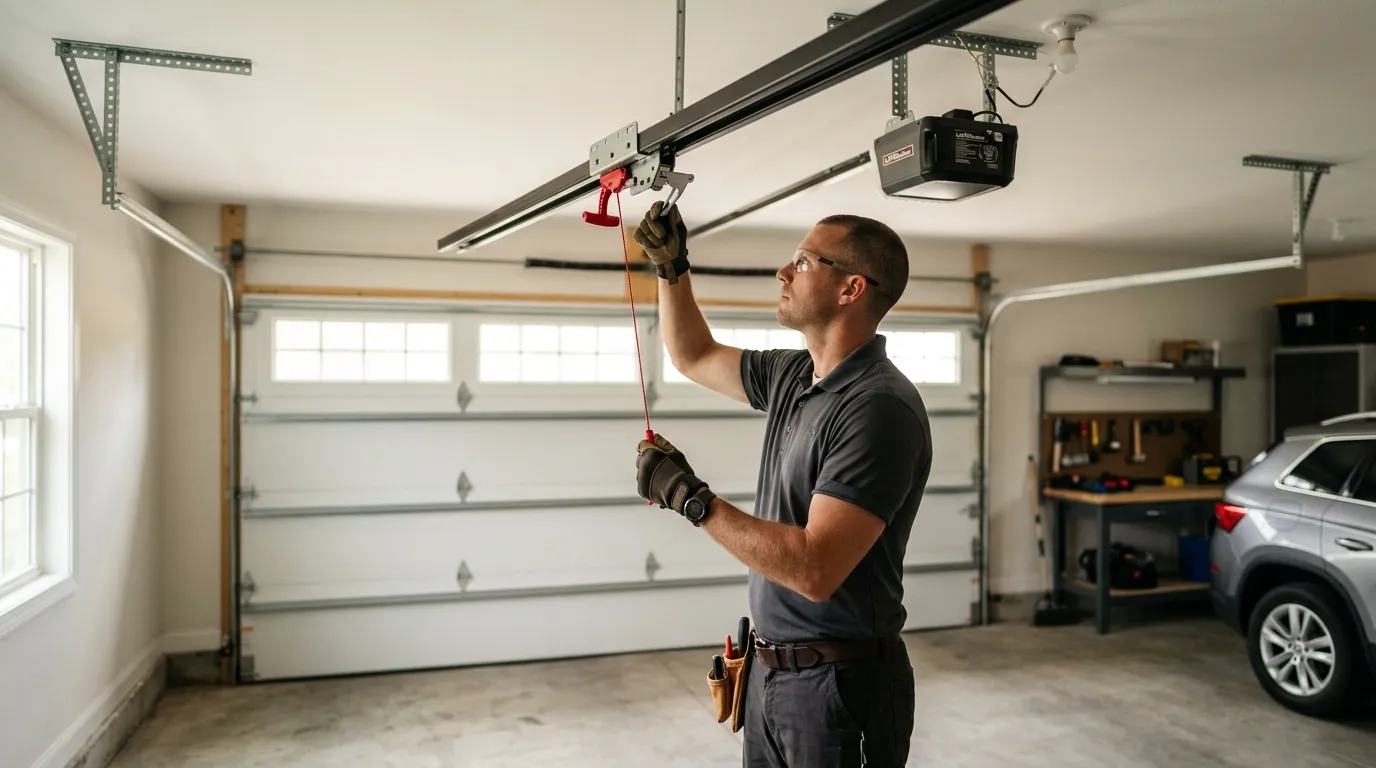
From broken torsion springs and aging chain-drive openers to worn rollers, cables, tracks, damaged panels, and full replacement, we work on the residential garage door systems common across Coppell's 1980s- and 90s-heavy housing stock.
COMMON COPPELL GARAGE DOOR PROBLEMS
The building stock runs mostly through the 1980s and 90s, with homes going up as early as 1959 and as late as 2014 and a median build year of 1999. Torsion springs on doors installed in the 80s and 90s are now aging systems, and a broken spring is the single most common call. Openers from that same era are often chain-drive units with worn gears or failed logic boards, while rollers and cables wear out too - and on many homes the original mechanical hardware may still be in place even if the opener has already been replaced.
Aging torsion springs on older two-car doors are one of the most common failures across the service area.
Older chain-drive units can develop worn gears, failed electronics, and other problems that may make replacement more sensible than another repair.
Original rollers and cables can wear gradually over years of daily use until noise, rough movement, or failure becomes noticeable.
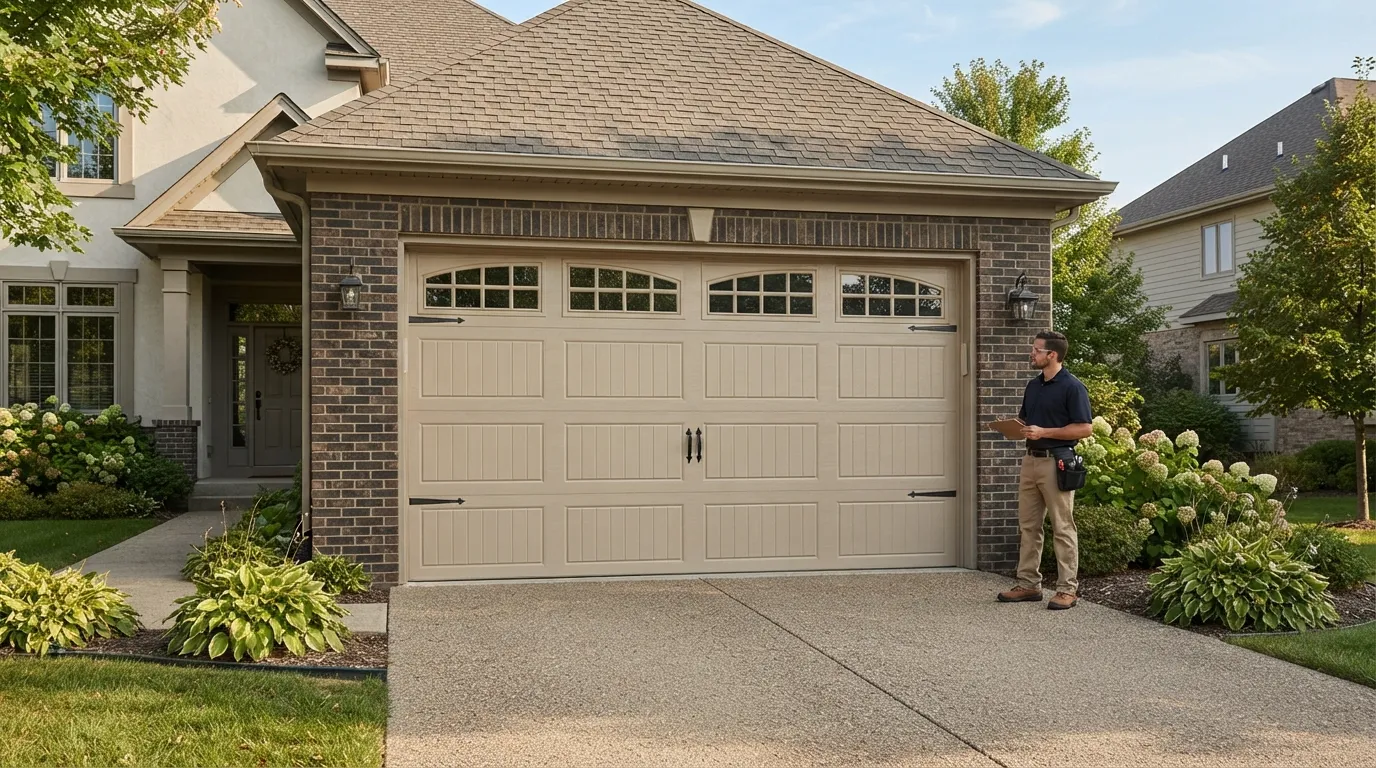
Newer homes more often develop sensor-alignment issues that can keep an otherwise functional door from closing.
Newer insulated doors can develop dents or impact damage that may be cosmetic or structural depending on the section.
Newer construction from roughly 2010-2014 tends to bring different problems: misaligned photo-eye sensors, damaged insulated panels, or newer openers that still need diagnosis even when they're under warranty.
LOCAL HOUSING MATTERS
With 87,582 households and 55,758 owner-occupied houses across the areas we serve, much of the garage door hardware comes from a housing build window running from 1959 to 2014, centered around 1999.
That means many homes may be on their second or third opener while still using older torsion springs, tracks, rollers, or other mechanical components underneath.
It also means a door that has only recently started making noise often fits a familiar pattern: the opener may be newer, while the springs, rollers, cables, or tracks have been cycling since an earlier installation. The housing stock gives useful clues, but the actual installed hardware still determines the diagnosis.
1980s–90s GARAGE DOOR SYSTEMS
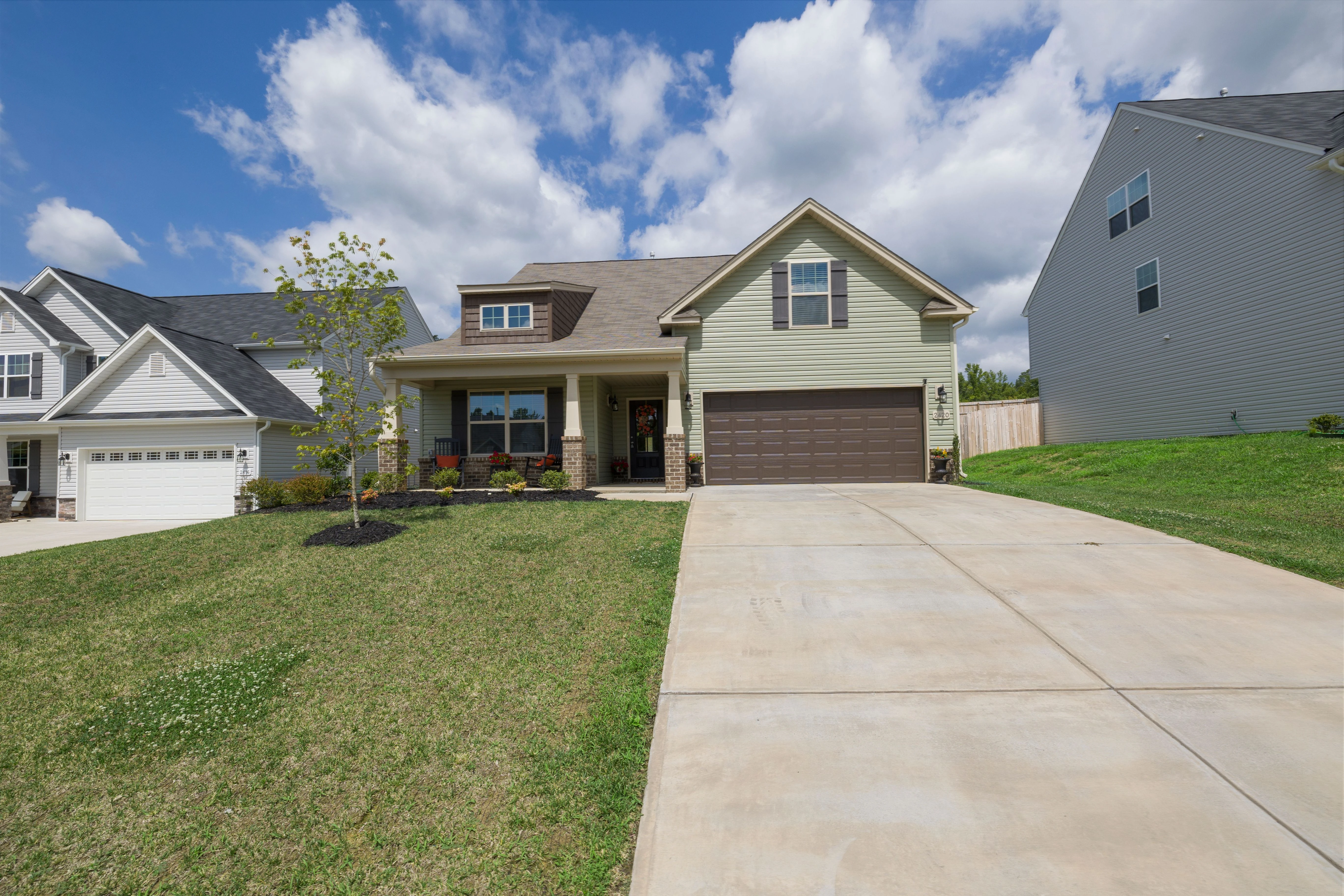
A large share of the local housing was built during the same general construction era, so similar spring, opener, roller, track, and panel systems repeat across the service area.
Older residential torsion systems remain common across homes built through the 1980s and 90s.
Older chain-drive units can still be found throughout the service area, often on their original or replacement electronics.
A newer opener doesn't necessarily mean the tracks, rollers, cables, or springs were replaced with it.
Homes closer to the 2010-2014 end of the build range are more likely to have insulated panels, photo-eye sensors, and more modern opener systems.
CLEAR REPAIR GUIDANCE
We're not going to hand you a number here, because it depends on what's actually wrong and what part your door takes. What drives the cost is whether it's an isolated spring problem or a larger assembly, whether the opener is a common chain-drive unit or something less common, and whether track or panel damage is cosmetic or structural.
Median household income across the service area runs above $146,000, and many homeowners choose to replace an aging opener rather than keep repairing a 20-year-old unit once repair costs start stacking up.
One limitation worth being clear about: we don't stock every opener model on the truck, and if yours is an older or less common brand, parts can take a few days to come in. We'll tell you that before the repair moves forward rather than pretending every opener component is immediately available.
REPAIR OR REPLACE?
A broken spring, cable, roller, or sensor doesn't automatically mean you need a new garage door. Replacement becomes more practical when repair costs start stacking up on an aging opener or structurally damaged door.
An isolated torsion spring failure on an otherwise sound door is typically a repair.
If an aging opener needs repeated gear or logic-board work, replacement may provide better value than continuing to patch it.
A dented panel isn't automatically a full-door replacement if the damage is cosmetic and the section remains structurally sound.
More serious track or panel damage can change the repair from an isolated part replacement to a larger rebuild or replacement.
WHAT TO EXPECT
Tell us whether the door won't open, a spring snapped, the opener is grinding, or the door has come off track.
A few questions help us understand what type of failure we're likely walking into before the visit.
On site, we inspect the actual system and explain what we're seeing before work begins.
If the repair can be handled during the visit, we do it. If a part has to be ordered, we tell you instead of guessing.
Not Every Opener Part Is Stock
Common chain-drive parts are more likely to be available, while older or less common opener brands may require a few days for parts to arrive.
PRACTICAL SERVICE. LOCAL HOUSING KNOWLEDGE.
Coppell's housing mix creates repeatable patterns in springs, openers, rollers, sensors, tracks, and panels, but the right repair still starts with inspecting the system in front of us - the current installed hardware matters more than assumptions based on the age of the house.
We work across the aging 1980s-90s hardware and the newer systems from the 2010s end of the area's 1959–2014 housing stock.
Chain-drive gears, logic boards, and aging opener components are familiar problems across older homes.
Photo-eye sensors, insulated panels, and newer opener systems bring a different set of service issues that we diagnose before replacing anything.
If an older opener is no longer worth repairing or a door still only needs one targeted part, we'll explain the difference. If an older or less common opener model needs parts that aren't stocked, we'll say so up front.
COPPELL + SURROUNDING COMMUNITIES
Coppell is home base, with service extending through the surrounding towns and neighborhoods across a wide radius. If your address falls somewhere in that ring, it's within our footprint.
QUESTIONS
Torsion springs are rated for a cycle count, not a calendar age, but most residential springs installed in the 80s and 90s are well past their expected life by now. If your house falls in that build range and the spring has never been replaced, it's due - a spring that fails mid-cycle can drop a door fast.
Yes. Both are within our regular service radius - Highland Village is about 10 miles out and Trophy Club about 11. We cover that whole stretch along with the other towns in our area, from Farmers Branch and Valley Ranch closer in to Northlake and Cross Roads further out.
Depends on the model and what's failing. A dead gear or a worn logic board on an older chain-drive unit often costs close to a full replacement once you add up parts and labor, and a new opener comes with modern safety features the old one doesn't have. We'll give you both numbers on the call so you can decide.
No, and we won't pretend otherwise. Common chain-drive units we stock parts for regularly. Less common or older brands sometimes take a few days to source. We tell you that up front rather than after the job's started.
READY WHEN YOU ARE
Tell us what the door is doing and we'll help you figure out whether you're dealing with a spring, cable, roller, track, opener, sensor, damaged panel, or an aging system that's reached the point where replacement makes more sense.