
Safe inspection limits
That's the limit of what you should try yourself. If a cable is off the drum, if the track is bent instead of just knocked loose, or if the door is sitting at an angle in the opening, stop.
Coppell, TX
A garage door off its track needs more than a shove back into place. See why it happens in Coppell homes built from 1959 to 2014 and how we fix it right.
DIY or pro
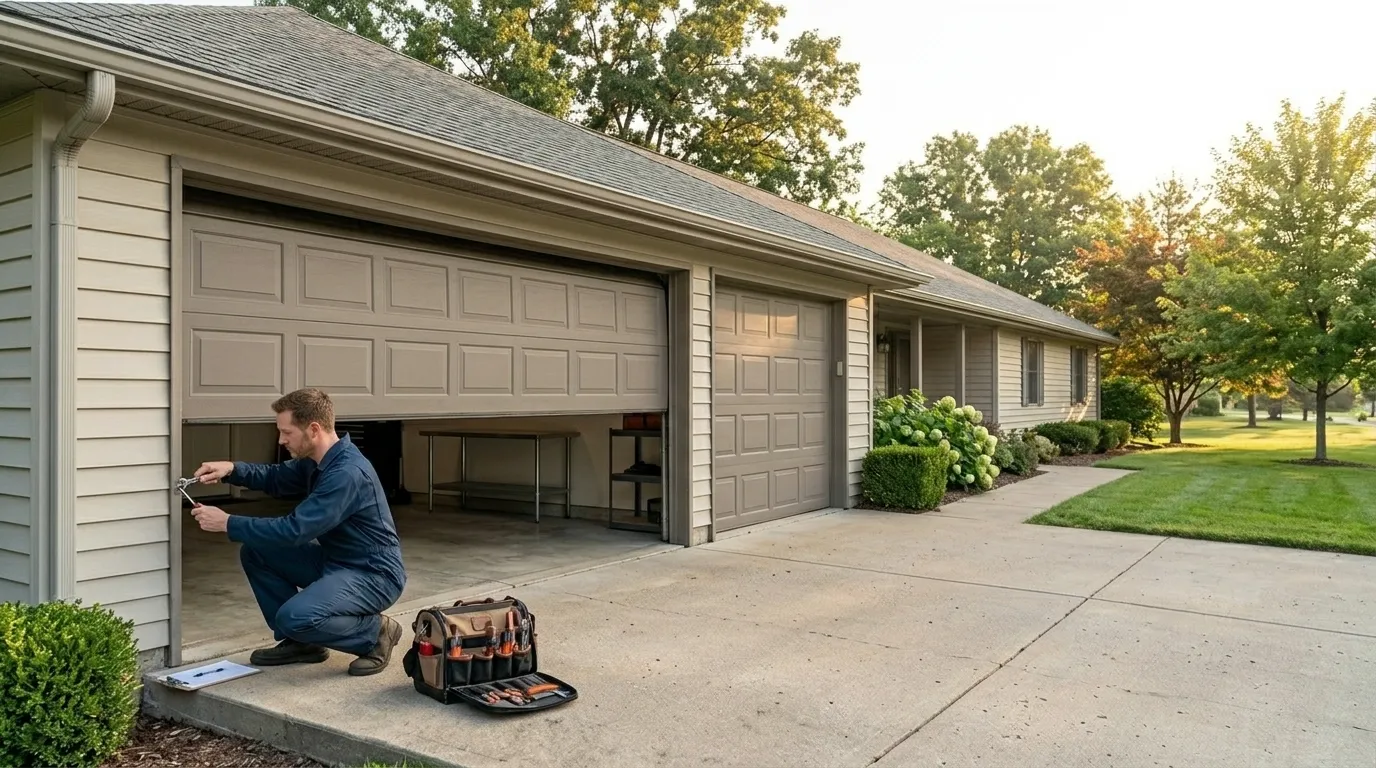
You can watch a video and get a door back on its track sometimes. If a roller popped out of the track on one side and the door is still hanging square, a homeowner with the right tools can sometimes walk it back in.
That's the limit of what you should try yourself. If a cable is off the drum, if the track is bent instead of just knocked loose, or if the door is sitting at an angle in the opening, stop.
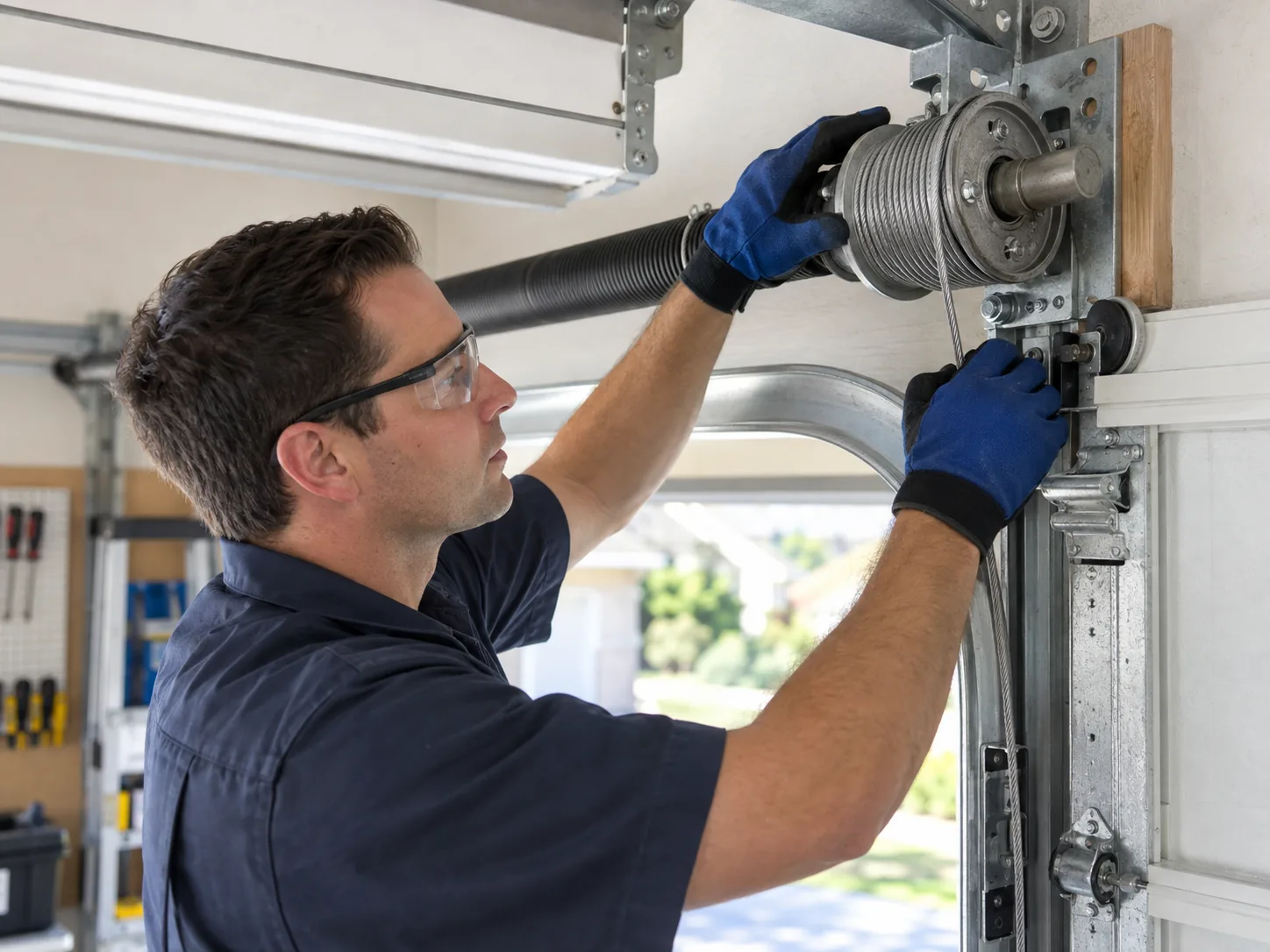
A torsion spring holds enough force to break fingers or worse, and a door that's off track on one side is often one bad pull away from coming down off both hangers.
We'd rather talk you through what to check by phone than have you find out the hard way that this wasn't a five-minute fix. The honest answer: if the door still moves freely and nothing looks bent, you can try. If it's binding, grinding, or hanging crooked, that's a call, not a project.
Our process
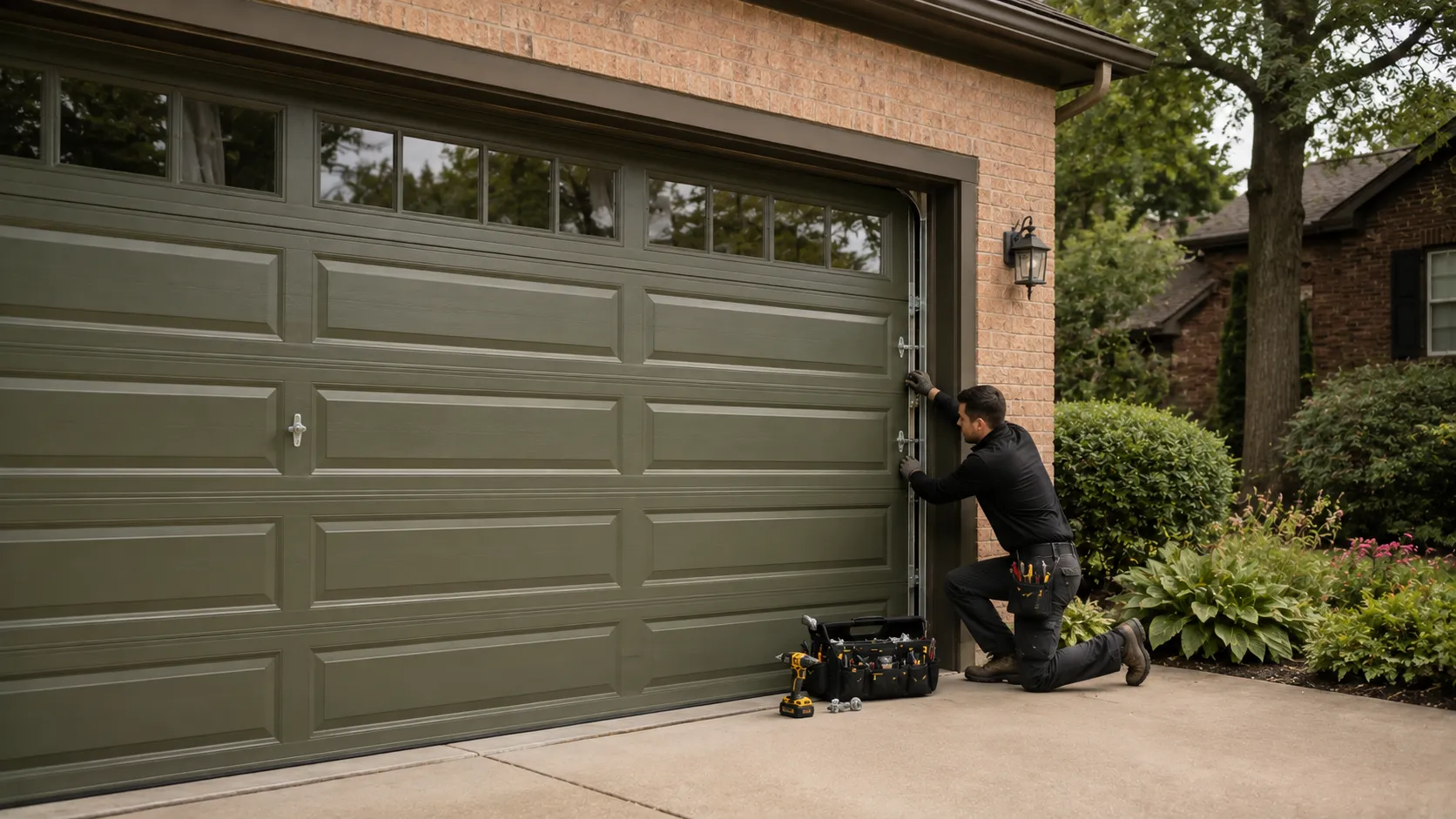
First we find out whether the track came loose or got bent, because those are two different jobs. A track that's pulled away from the frame gets re-anchored and squared against the door panel.
A track that's bent - usually from someone backing into it or a door forced past a stuck point - gets replaced on that section rather than hammered straight, because a straightened track rarely runs true again.
Next we check the rollers themselves. Worn or cracked rollers are often what let the door jump the track in the first place, so putting the door back without replacing them just sets up the same call again in a few months.
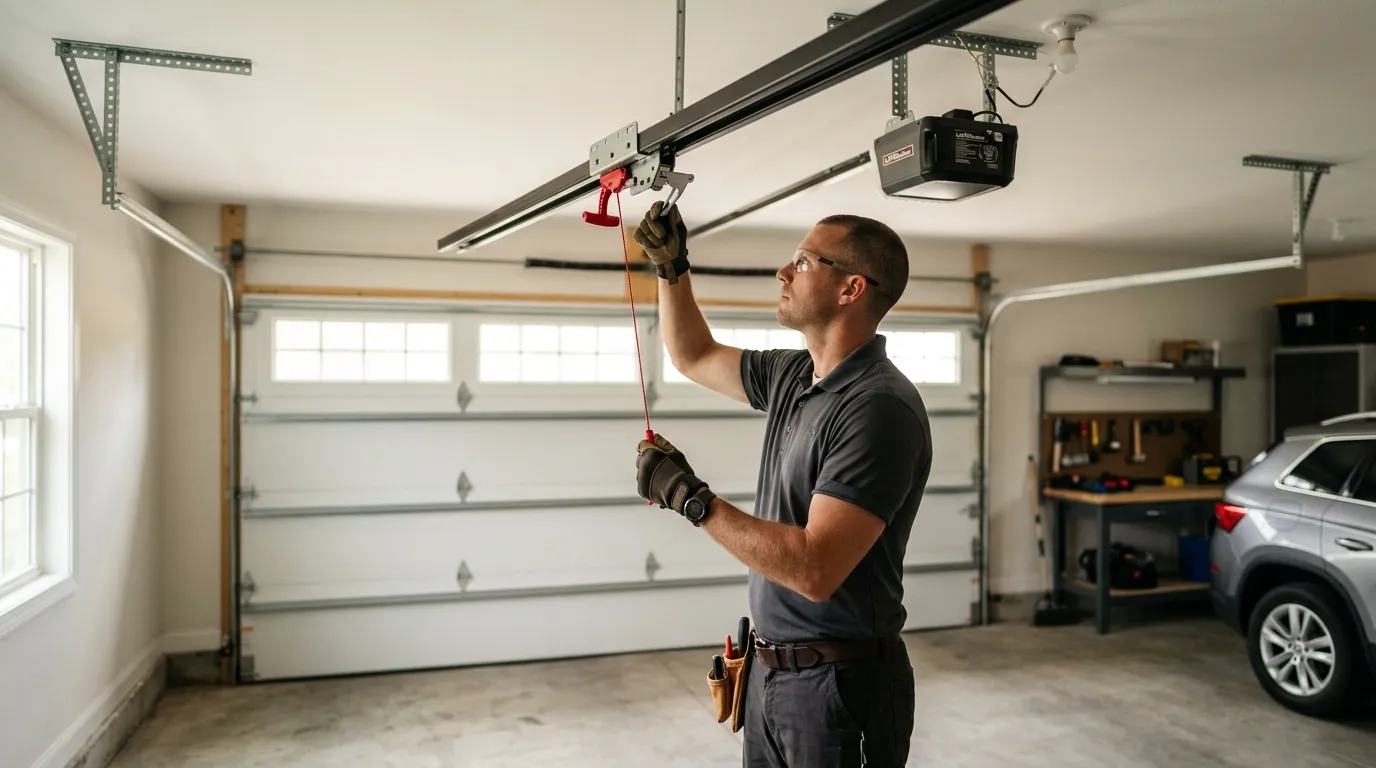
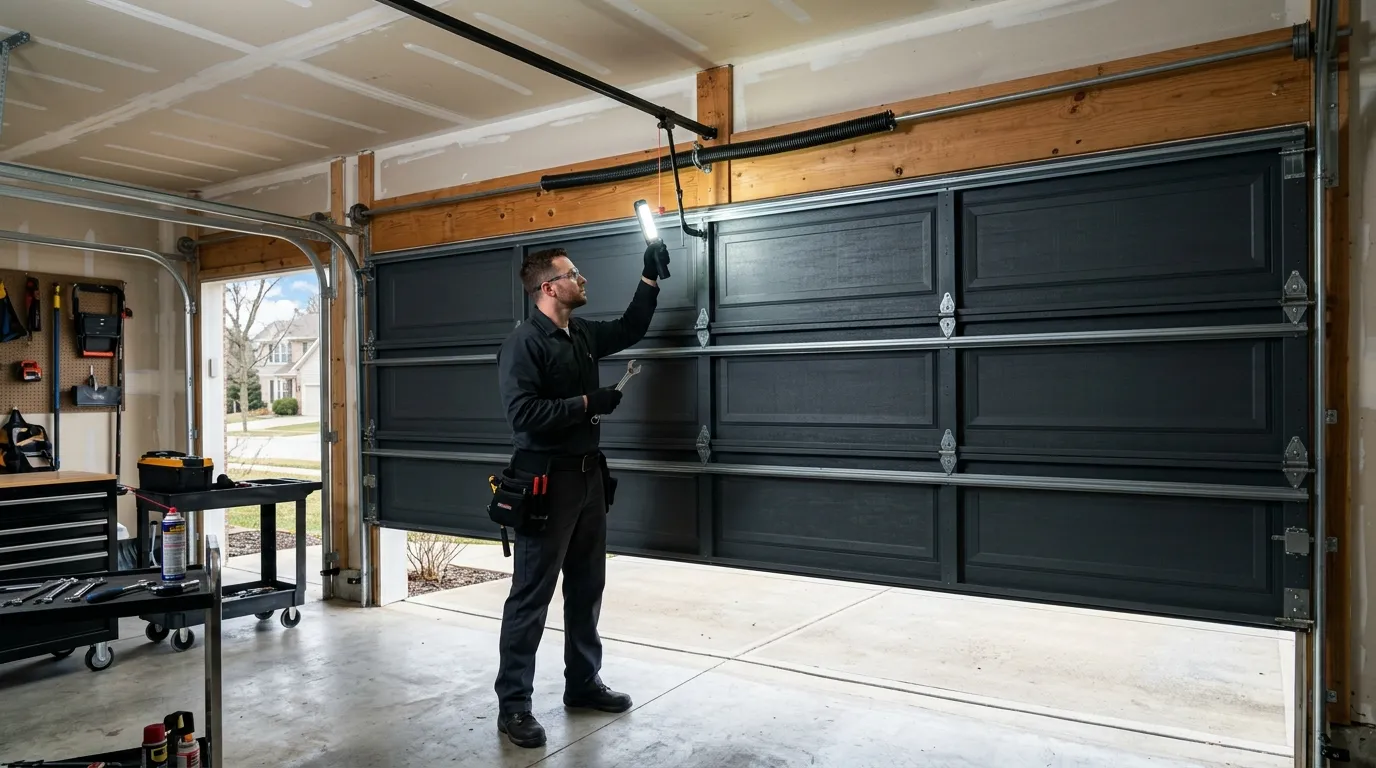
Last we check cable tension and spring balance, because a door that's out of balance puts uneven load on the tracks every time it runs and will walk itself off again. We don't consider the job done until the door runs the full cycle smooth, quiet, and square in the opening - not just back in the tracks.
Warning signs
Most calls we get for this start the same way: the door stopped halfway, or it's making a grinding or popping sound instead of the usual hum. Sometimes a homeowner notices a gap between the roller and the track on one side, or the door sits tilted when it's down. Other times it's quieter than that - the door still opens and closes, but it's rattling more than it used to, which usually means a roller is about to let go rather than already gone.
A door that's come off track completely won't move at all, or will move a few inches and stop hard. If you hear a bang followed by the opener straining and going nowhere, don't keep hitting the button. Every extra cycle with a jumped roller chews up more of the track and makes the eventual repair bigger.

Local causes
A lot of the housing across this service area went up between 1959 and 2014, with the bulk of it dating to the 1980s and 90s across the 22 communities we cover. That means a wide mix of original steel track and roller hardware from three different decades of building standards, and a lot of it is original equipment that's simply worn out rather than damaged in one event.
The climate here runs moderate on heat, which is easier on garage door hardware than a lot of the country, but it doesn't stop wear - it just changes the failure pattern from cracked seals to worn rollers and loosened track brackets over the years. Combine 20 to 40 year old track hardware with a garage that sees daily double-cycle use and this is one of the more common calls we take across the area.
Questions
Only if the door still moves freely, nothing looks bent, and it's off on one side with the cable and spring still intact. If the door is crooked, binding, or a cable is loose, stop and call - the spring tension can cause real injury and forcing it can turn a track repair into a full door replacement.
Usually there wasn't no warning - a roller was worn thin or a bracket had loosened over months and finally let go. Homes with original hardware from the 1980s and 90s often show gradual wear that sounds like a small rattle right up until the day it isn't.
Not always, but often for the section that's bent. A straightened track can look fine and still run out of true, which means the rollers will fight it constantly and pop out again. We replace the bent section rather than reuse it in most cases.
We don't have a set number to quote here since it depends on whether it's just a track adjustment or track plus rollers plus cable work. We can give you a real number after we look at it.
Explore more

Ready when you are
Coppell Garage Door Co repairs and installs garage doors, springs and openers in Coppell, TX and the surrounding area.