Keller, Coppell

Spring Repair for Keller's Late-1990s Garage Doors

Torsion spring repair for Keller's late-90s two-car steel doors, serviced from Coppell, 14 miles out. Same-day booking, no invented street promises.

Spring Repair for Keller's Late-1990s Garage Doors in Coppell
Serving Coppell, TXBackground-checked techsHonest, upfront pricingFast local response

Booking

How to Book

We run this job out of Coppell, about 14 miles from Keller, so we don't keep a local branch or a crew sitting idle nearby.

  1. Parts stock readiness

    What we do is schedule the run when you call, tell you the truck's route, and show up with the spring stock that matches what's actually on your house. Because we're driving in rather than around the corner, we ask you to confirm the door width and whether it's one spring or two before we load the truck - a 16-foot double door takes different hardware than a single 9-footer, and guessing wrong means a second trip.

  2. Route and timing communication

    We don't promise a same-hour arrival here the way a shop based in Keller might; we promise the right parts on the first visit, which on a 25-year-old torsion setup matters more than speed.

  3. Online booking accessibility

    Book online through our Keller service page or call and describe the noise or the stuck position - that alone tells us most of what we need before the truck leaves Coppell.

Watch-outs

What Can Go Wrong

A broken torsion spring on a double door is the call we get most from this side of the metroplex, and Keller's housing stock explains why.

1999-era door specifications

With a median build year of 1999, most doors here are steel sectional, 16 feet wide for two-car garages, running on torsion springs sized for that era's heavier insulated panels rather than the older extension-spring setups you'd find in a house built before 1980.

Cable damage from failure

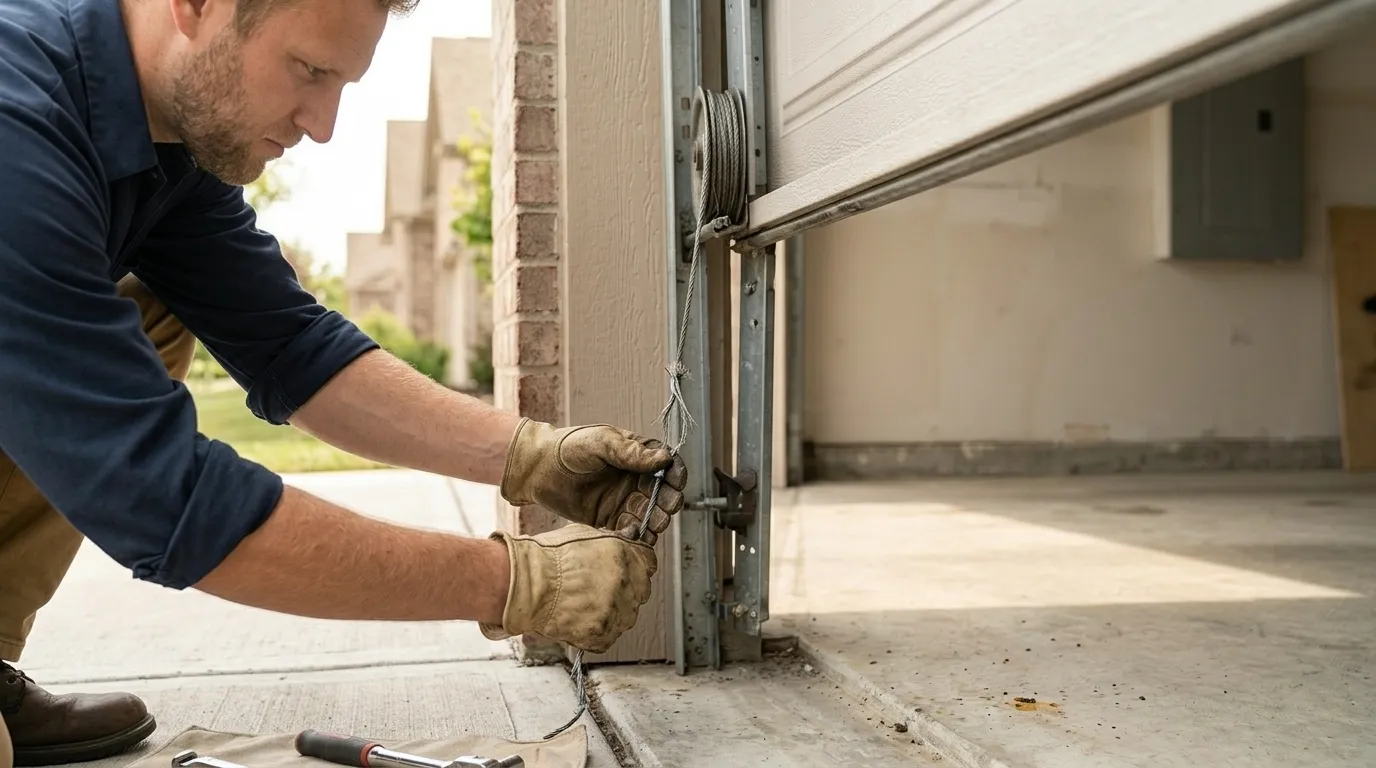
When one of those springs goes, the door doesn't ease down - it drops, and the opener strains against dead weight it was never built to lift alone. Cables can jump the drum on the way down.

Bearing plate deterioration

Less dramatic but just as common: a spring that's simply lost tension over two-plus decades of cycling, so the door lifts crooked or the opener grinds trying to compensate. We also see bearing plates worn from the same age of hardware, which changes the fix from a spring swap to something bigger.

Local causes

Why It Happens Here

Keller's homes cluster tightly around that 1999 median, which means a large share of the doors we see on a given week were installed within a few years of each other - and they're aging out of their torsion springs at close to the same rate. A steel torsion spring is rated for a number of open-close cycles, not a number of years, but a 25-year-old spring on a household that uses the garage door as the main entrance has usually put in more cycles than the spec sheet assumed. Add in North Texas's moderate heat load, which isn't the punishing swing some regions get but still cycles the steel through expansion and contraction every season, and you get springs that fatigue on a fairly predictable clock. With household income here running well above the wider service area's median, we also see a fair number of upgraded insulated doors - heavier panels put more load on the same-sized spring, which shortens its working life if the spring wasn't upsized to match.

Why It Happens Here
What Is on the Truck

On the truck

What Is on the Truck

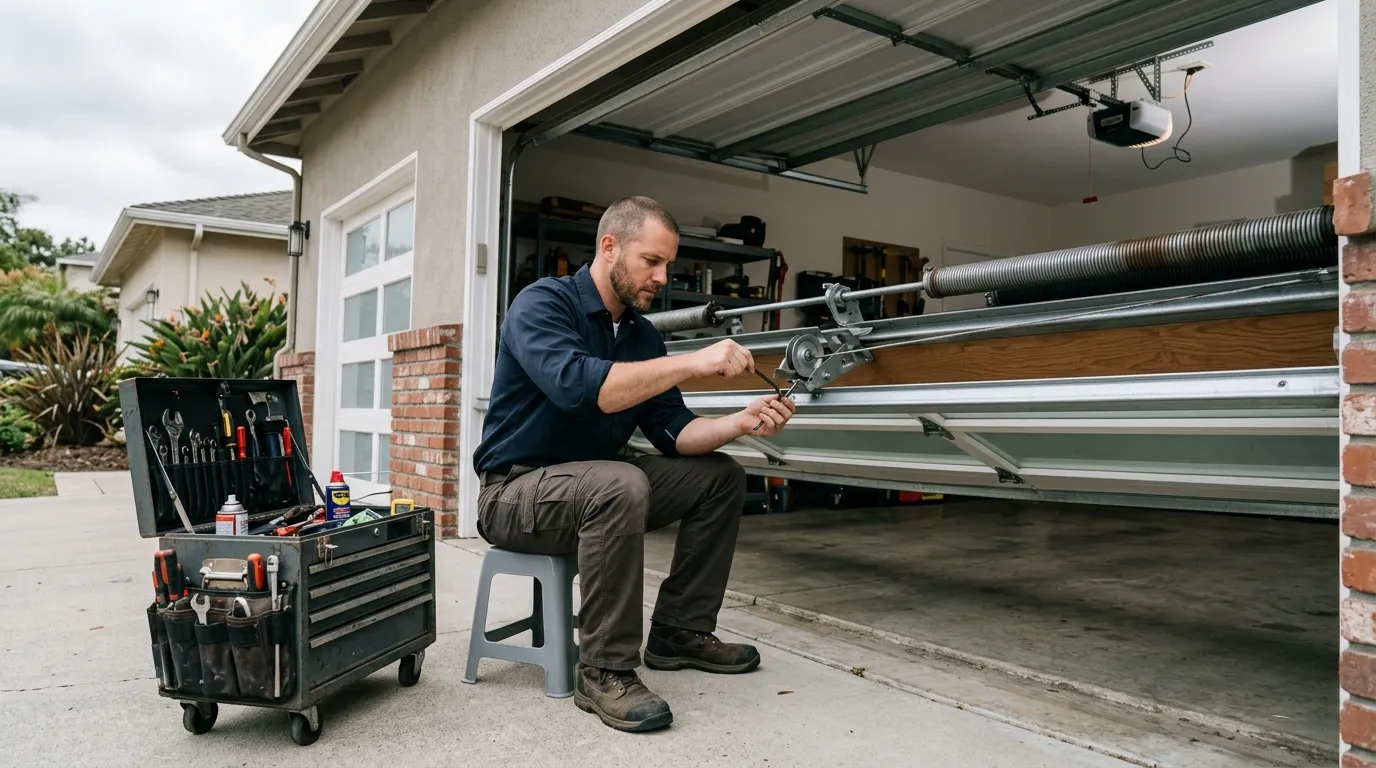
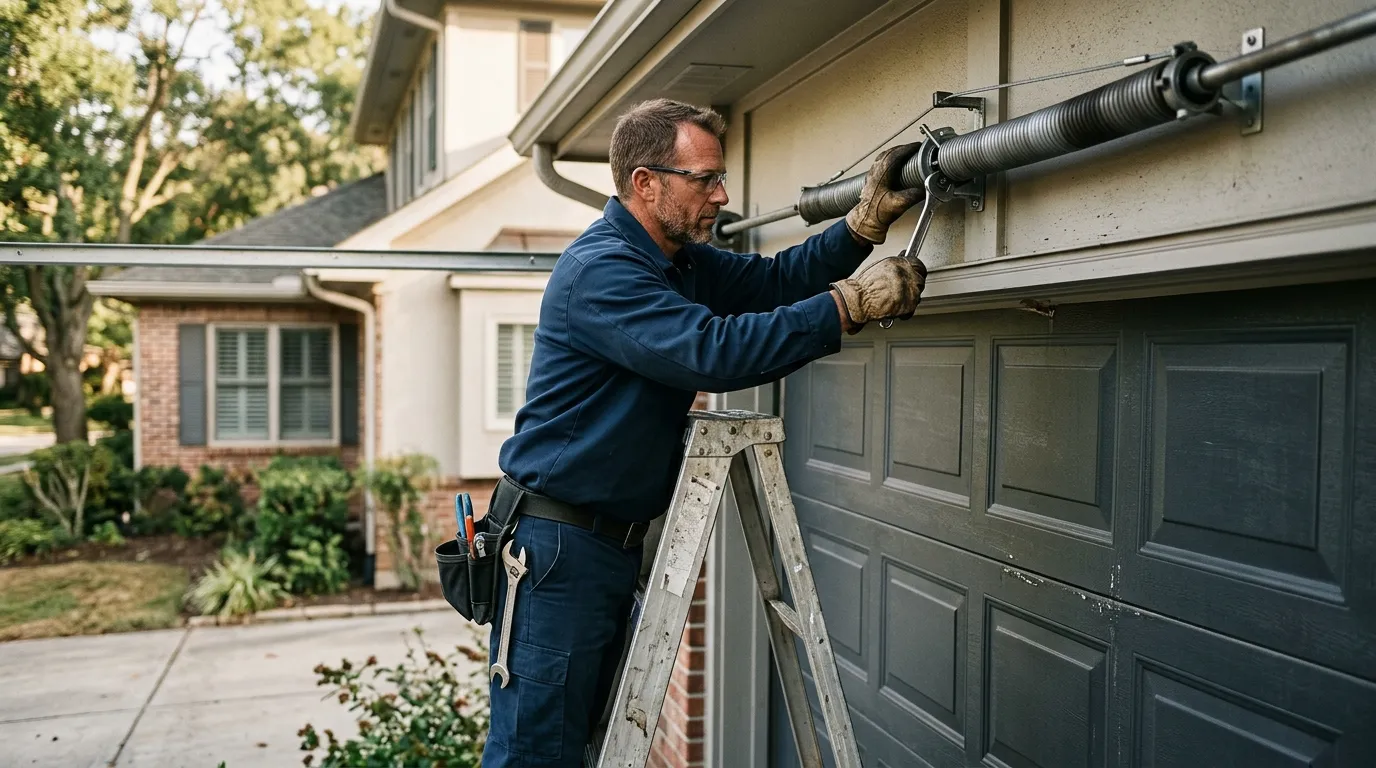
For a Keller call we load torsion springs across the common wind and wire-size combinations that fit 16-foot and 9-foot steel sectional doors from the late 1990s and 2000s build years, plus the shorter run of extension springs for the occasional older single-door garage that predates that boom. We carry both standard and high-cycle spring options, since a homeowner replacing a spring on a door they use daily is often better served paying a bit more for the longer-rated part. Cable, drum, and bearing plate stock rides along too, because a snapped spring often takes a cable or a worn bearing down with it, and finishing the job on the first visit means having those parts already on the truck rather than ordering them after we've seen the failure. What we don't carry is custom or oversized commercial spring stock - if your door is a nonstandard size, we'll tell you that on-site rather than guess.

Our process

How We Fix It

We start by pulling the door off the opener and manually cycling it to isolate whether the fault is the spring, the cable, or the bearing plate - a broken spring is obvious, but a spring that's just lost tension can hide behind opener strain until you check it by hand.

Hand-pull balance testing

Once we've confirmed it's the spring, we match the replacement to the door's actual weight and width rather than swapping in whatever was there, because plenty of doors get upgraded panels over the years without the spring being resized to match.

Unbalanced door dangers

We set tension, run the door through a full cycle test, and check the opener's force settings afterward, since a door that's been fighting a weak spring for months often has the opener's limits set wrong to compensate.

Follow-up opener inspection

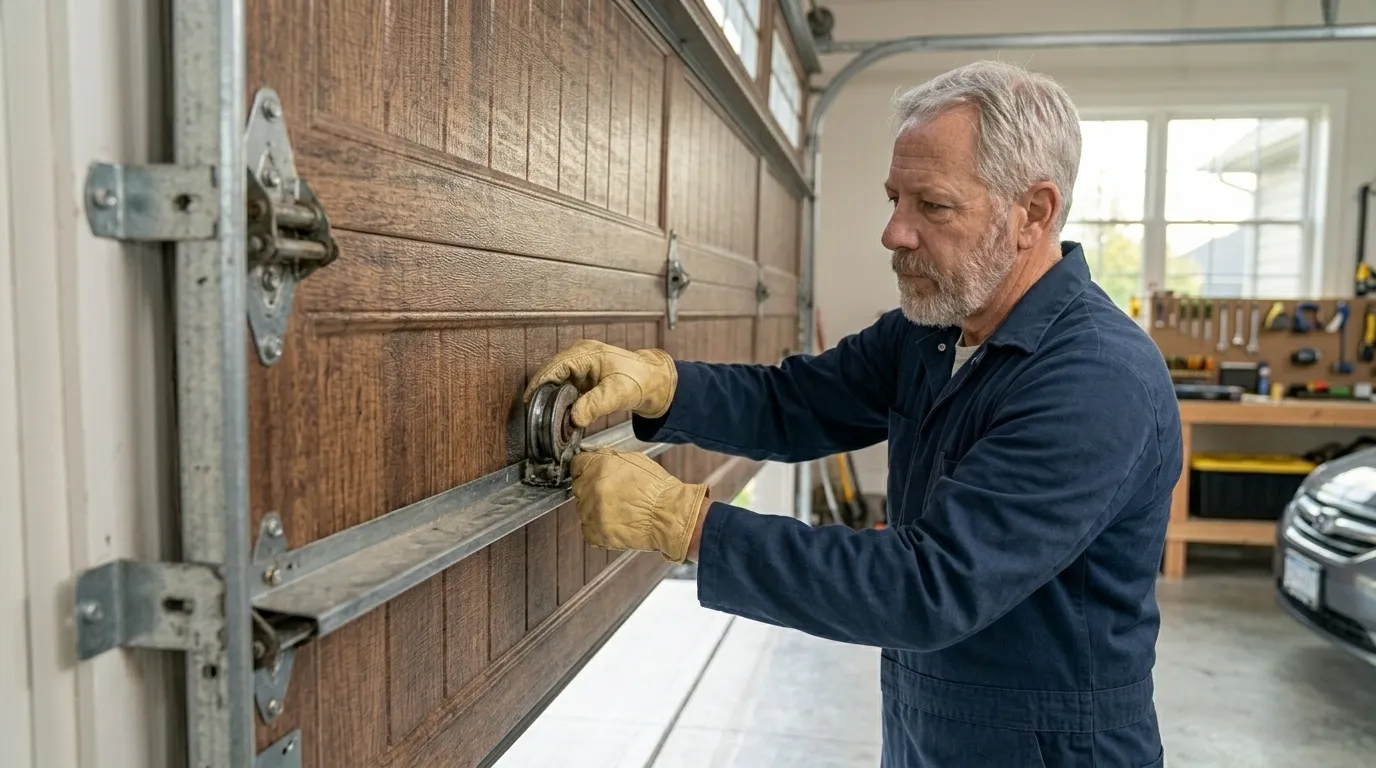
If the bearing plates are shot, we say so before we close it up - that's a separate repair, not something we fold into the spring swap and hope it holds.

How It Shows Up

Warning signs

How It Shows Up

Most Keller calls start the same way: the door won't budge, or it drops fast the last foot before stopping hard. Some homeowners hear it first - a loud bang from the garage, usually the spring itself snapping under tension. Others notice it gradually: the opener straining longer than it used to, the door lifting slightly crooked, or a visible gap in the torsion spring where it's supposed to be a tight coil. On the newer end of Keller's housing stock, where insulated steel doors are heavier, a failing spring tends to show up as opener struggle before it shows up as a full break - the motor works harder each week until something gives. If your door has been making that grinding, straining sound for a while, that's usually the spring telling you it's close, not the opener being the problem.

Questions

Common questions

How much does a spring repair cost in Keller?

We don't have a fixed number to quote here - it depends on whether it's one spring or two, standard or high-cycle, and whether cables or bearing plates need replacing too. We give you the price on-site once we've seen the door and the actual hardware, before any work starts.

Do you have a location in Keller?

No. We run this job from Coppell, about 14 miles away. There's no local branch or standby crew in Keller, but we carry spring stock sized for the door types common to this area's late-1990s and 2000s build years, so most jobs finish in one visit.

Can I replace a torsion spring myself?

We'd advise against it. Torsion springs hold enough stored tension to cause serious injury if released wrong, and the tools to wind them safely aren't something most homeowners keep around. It's one of the few garage door jobs worth always calling for.

Why did my spring break with no warning?

Torsion springs fail by cycle count, not by age on the calendar, so a spring can look fine one day and go the next after its rated number of open-close cycles runs out. Heavier insulated doors, common on Keller's newer housing stock, put more load on the spring and can shorten that life.

Ready when you are

Need a garage door sorted in Coppell?

Coppell Garage Door Co repairs and installs garage doors, springs and openers in Coppell, TX and the surrounding area.

Call Now(469) 796-3144