
Off-track visual signs
Sometimes it's quieter - a panel that looks tilted at the bottom, a gap between the roller and the track you can see from outside, or a door that runs but grinds on one side.
Highland Park, Coppell
Highland Park homes date to 1973 on average, so track and roller hardware is often original. We travel 14 miles from Coppell to fix doors that have jumped track.
Local causes
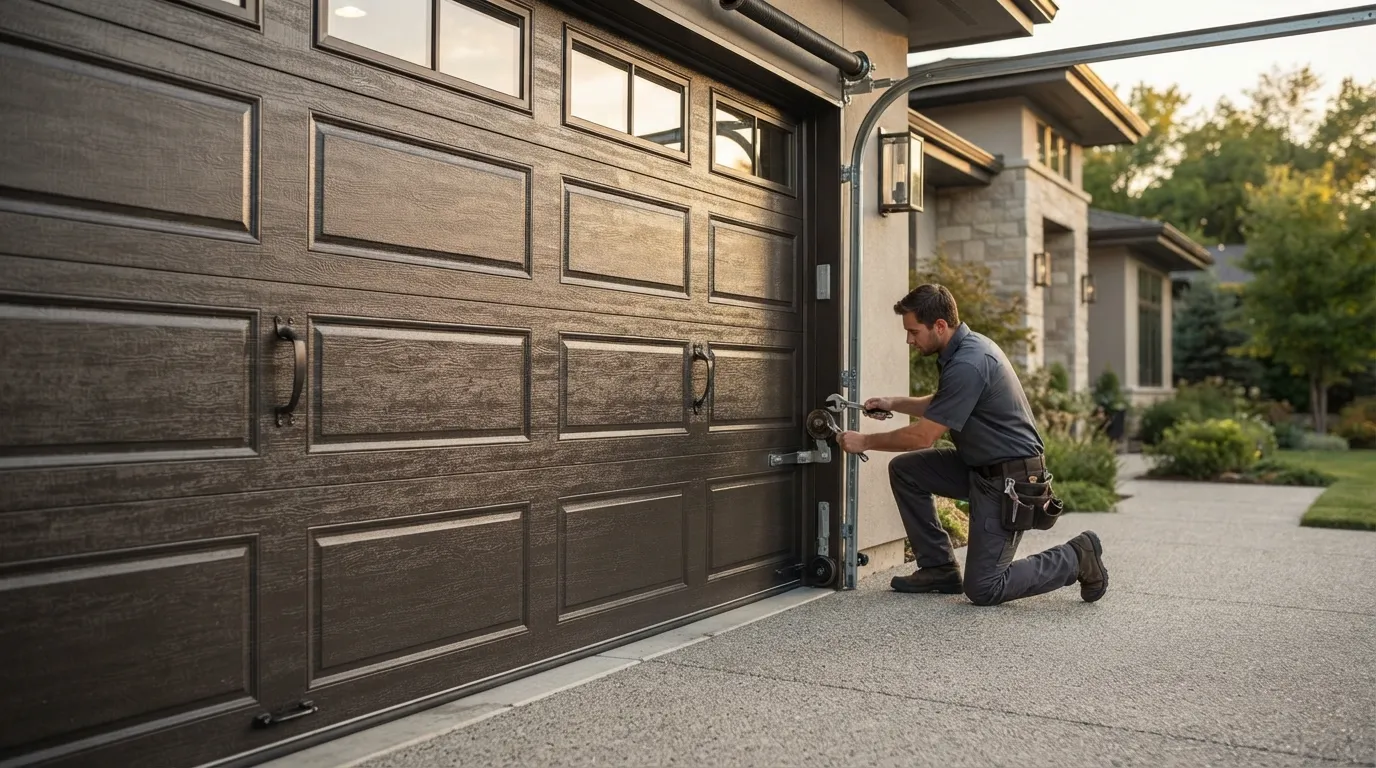
The median home in Highland Park went up around 1973, which puts a lot of the original track and roller hardware at over fifty years old. Galvanized track from that era wasn't built for the cycle counts a door sees today, and after five decades the mounting brackets holding it to the jamb have usually loosened at least once, even if nobody noticed. Add in steel rollers that were never swapped for nylon, and you get a track that's slightly bent, slightly out of plumb, or holding on with screws that have backed out a quarter turn at a time. None of that is dramatic on its own. But it's exactly the setup that lets a door pop off the track the first time a spring is unbalanced or a cable stretches unevenly. We see this pattern across the older pockets of the metro, and a house built in 1973 is squarely in that window. It's not a knock on the house - it's just hardware that's outlived its intended service life and is due for a look, whether or not the door has actually derailed yet.
Warning signs
An off-track door usually announces itself with a bang, a scrape, or a door that stops halfway and won't go up or down.
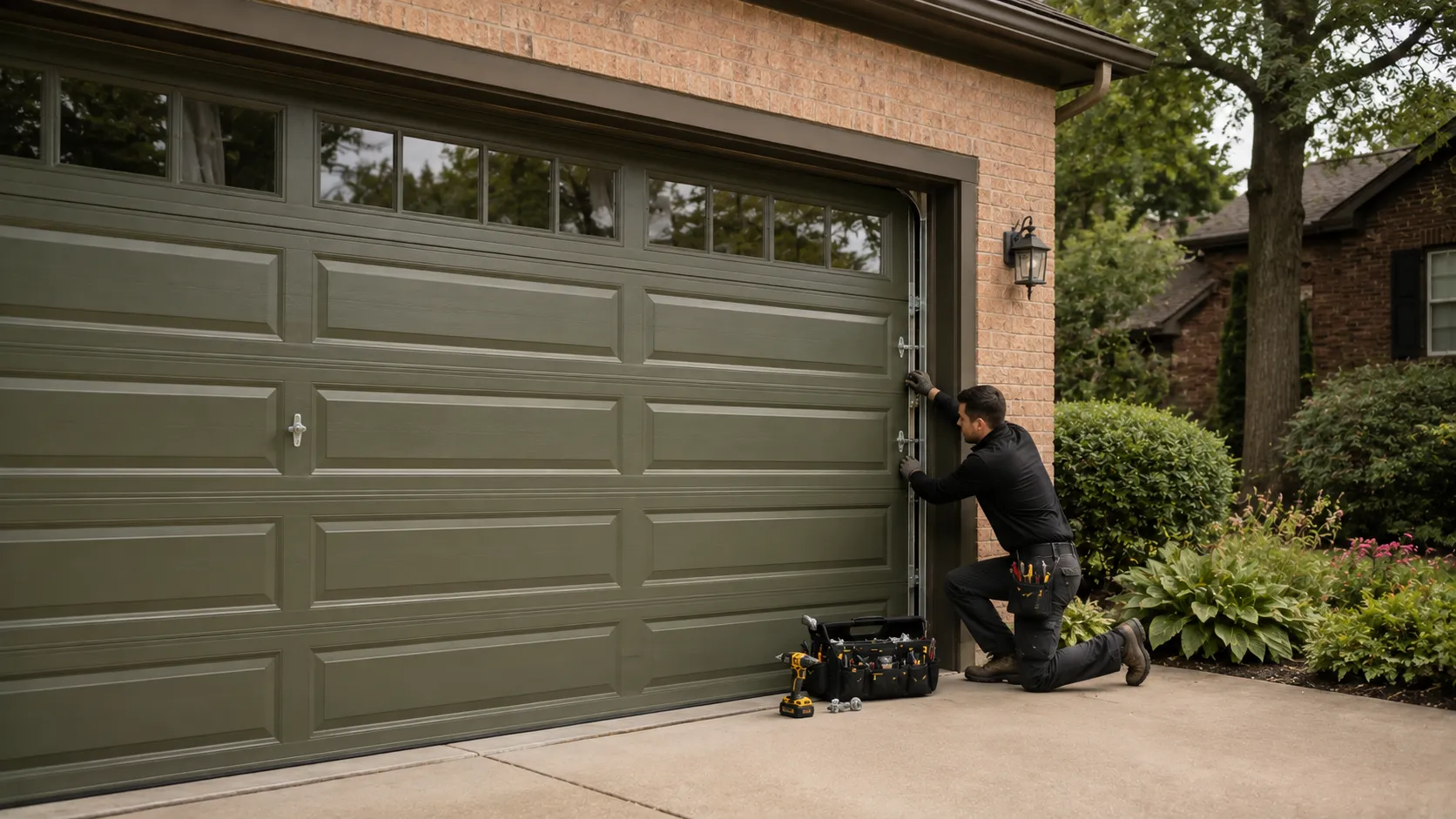
Sometimes it's quieter - a panel that looks tilted at the bottom, a gap between the roller and the track you can see from outside, or a door that runs but grinds on one side.
On original 1973-era hardware, the more common lead-up is a track bracket that's worked loose over the years, so the rail flexes slightly every time the door runs, until one day a roller finally walks out of it. If your opener keeps reversing or the door shudders partway through a cycle, that's often the warning shot before it fully derails.

Booking
We run out of Coppell, about 14 miles from Highland Park, so a call ahead helps us bring the right hardware instead of guessing on-site - especially replacement track and brackets sized for older installs rather than newer stock spacing. Tell us the door's age if you know it, whether it's stuck open or closed, and whether the opener is still trying to run it. That's usually enough for us to load the truck correctly before we head out. You can also see [other areas we cover from Coppell](/near/highland-park/) if you want the wider picture of where we work.
DIY or pro
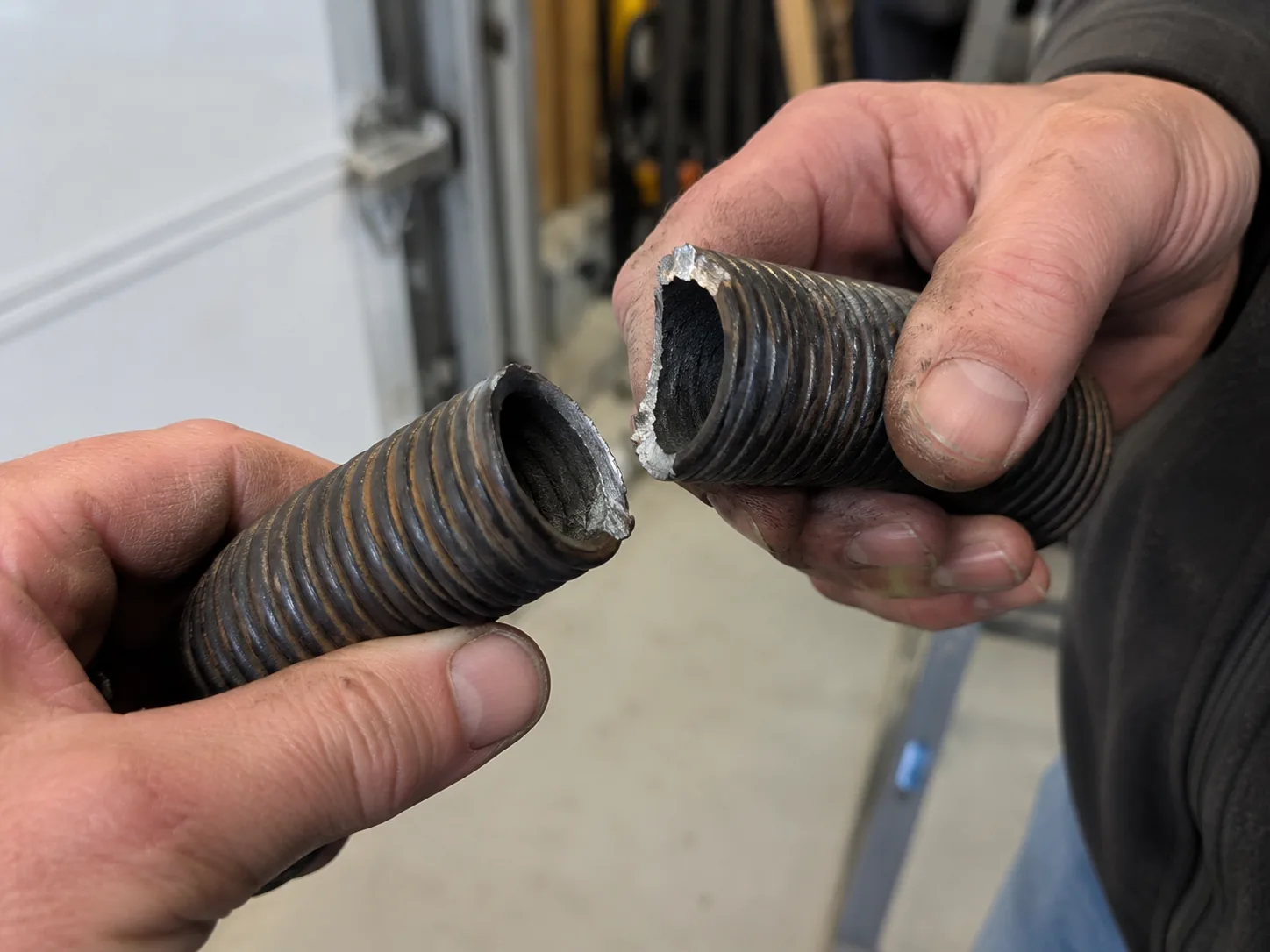
Pushing a light residential door back onto its track by hand is sometimes possible if it's only off by an inch and the spring is still holding tension - but on a house this age, the spring is just as likely to be original as the track is, and a spring under tension that lets go while you're leaning on the door is a hospital trip, not a repair job.
If the door is heavy, if it dropped suddenly, or if you can see a bent track rather than just a popped roller, that's a call, not a project.
Where DIY does make sense is the easy stuff: clearing an obstruction in the track, checking that nothing fell into the rail, or confirming the opener's safety sensors aren't the actual cause of a door that won't close.
Beyond that, the honest answer is that fifty-year-old brackets and a torsion spring aren't a Saturday-afternoon fix, and trying to force a bent rail straight usually just moves the problem to a different spot on the same track.

Downtime
A straightforward roller-back-on-track job is usually the fastest thing we do - it's the bent track, worn bracket, or original spring hiding behind it that adds time. If the track itself is bent or the brackets have pulled loose from the jamb, we're often replacing a section rather than adjusting one, and that's a different job than a quick reset. We won't know which one it is until we're looking at it, so we don't quote a fix time over the phone. What we can tell you is that on a house from the early 1970s, we go in expecting to find aging hardware, not just a door that slipped - and we'd rather tell you that up front than surprise you with it once the panel's off. For the general off-track service and what it typically involves, see the [Coppell off-track repair page](/garage-door-off-track-coppell-tx).
Questions
It's common. Highland Park's median build year sits around 1973, and track and brackets from that era weren't always replaced unless something failed outright. If your door has never had major work done, there's a good chance the rail and mounting hardware are the same age as the house.
About 14 miles. We travel out from Coppell for off-track calls in Highland Park, so it helps to describe the problem clearly on the phone - stuck open, stuck closed, grinding, or fully derailed - so we bring the right hardware on the first trip.
Only if it's a minor slip and the spring isn't under load - and even then it's risky on older hardware. If the track is visibly bent or the door dropped suddenly, don't force it. A spring releasing while you're working on the door can cause serious injury.
Not exactly. A popped roller is a quick fix, but a bent track or a fifty-year-old spring changes the job. We'd rather look at it in person than guess over the phone and be wrong.
Explore more
Ready when you are
Coppell Garage Door Co repairs and installs garage doors, springs and openers in Coppell, TX and the surrounding area.