
1997-era door standards
That means steel sectional doors on torsion springs, sized for two-car and single garages built to that era's rough opening standards, not the older side-hung one-piece doors you'd find in a neighborhood built before 1960.
Corinth, Coppell
Corinth homes median at $118,949 income and built around 1997 change the install math. See what that means for your door, from the crew based 13 miles away in Coppell.
Booking
Corinth's median household income sits at $118,949, well under the $146,314 median across the rest of our service area. That gap matters before you talk about panels or insulation, because it changes where the repair-or-replace line falls.
A household at this income level is usually better served fixing a spring or opener on a door that still has good bones, and saving full replacement for a door where the track is bent, the panels are rusted through, or the opener is original and dying.
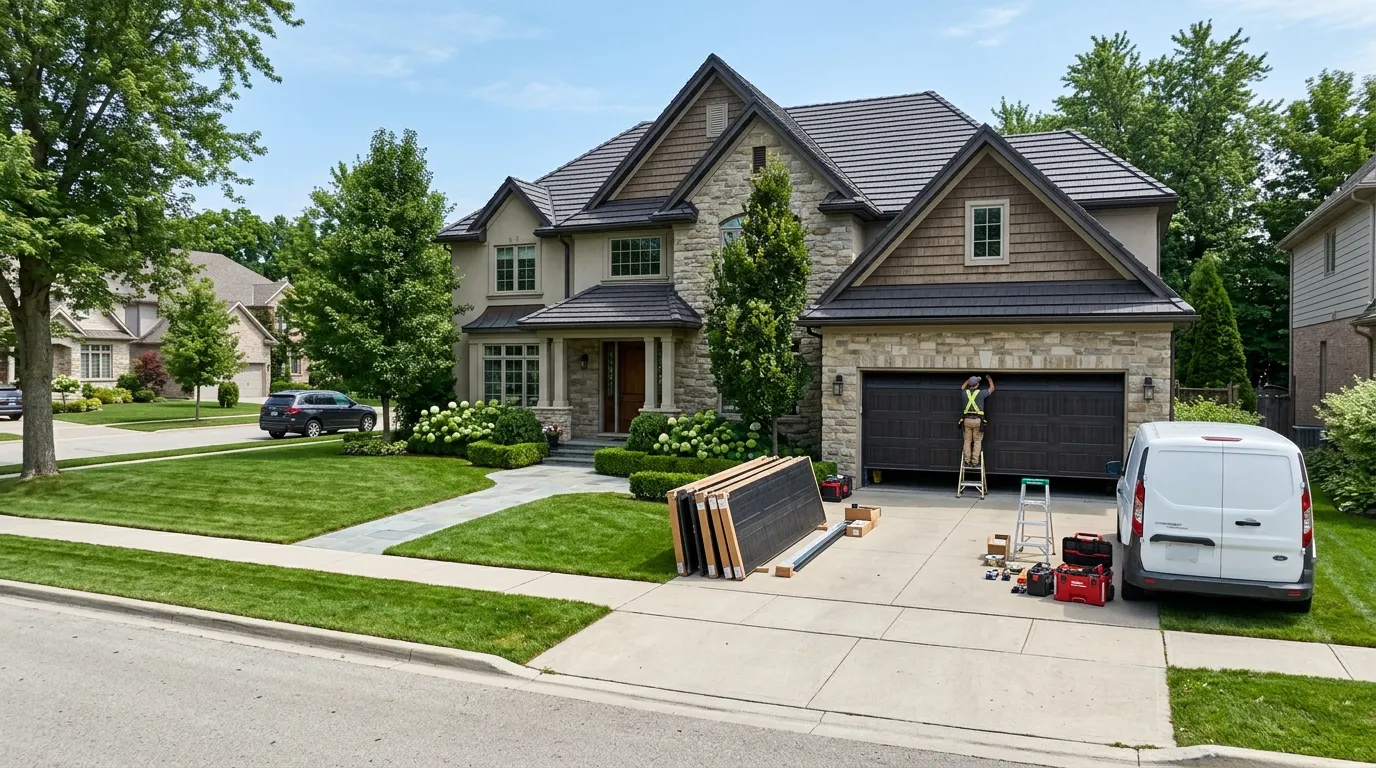
We quote both options on the same visit so you're not guessing which side of that line your door is on. Booking works the same way it does anywhere else we cover: you call or request a time online, we confirm a window, and a crew comes out from Coppell, about 13 miles away.
We don't keep a branch or a drop box in Corinth, so every job here gets scheduled the same way - no walk-in counter, no same-day guarantee we can't back up. If you need a firm number before committing to anything, ask for it in writing at the estimate, not over the phone.
On the truck
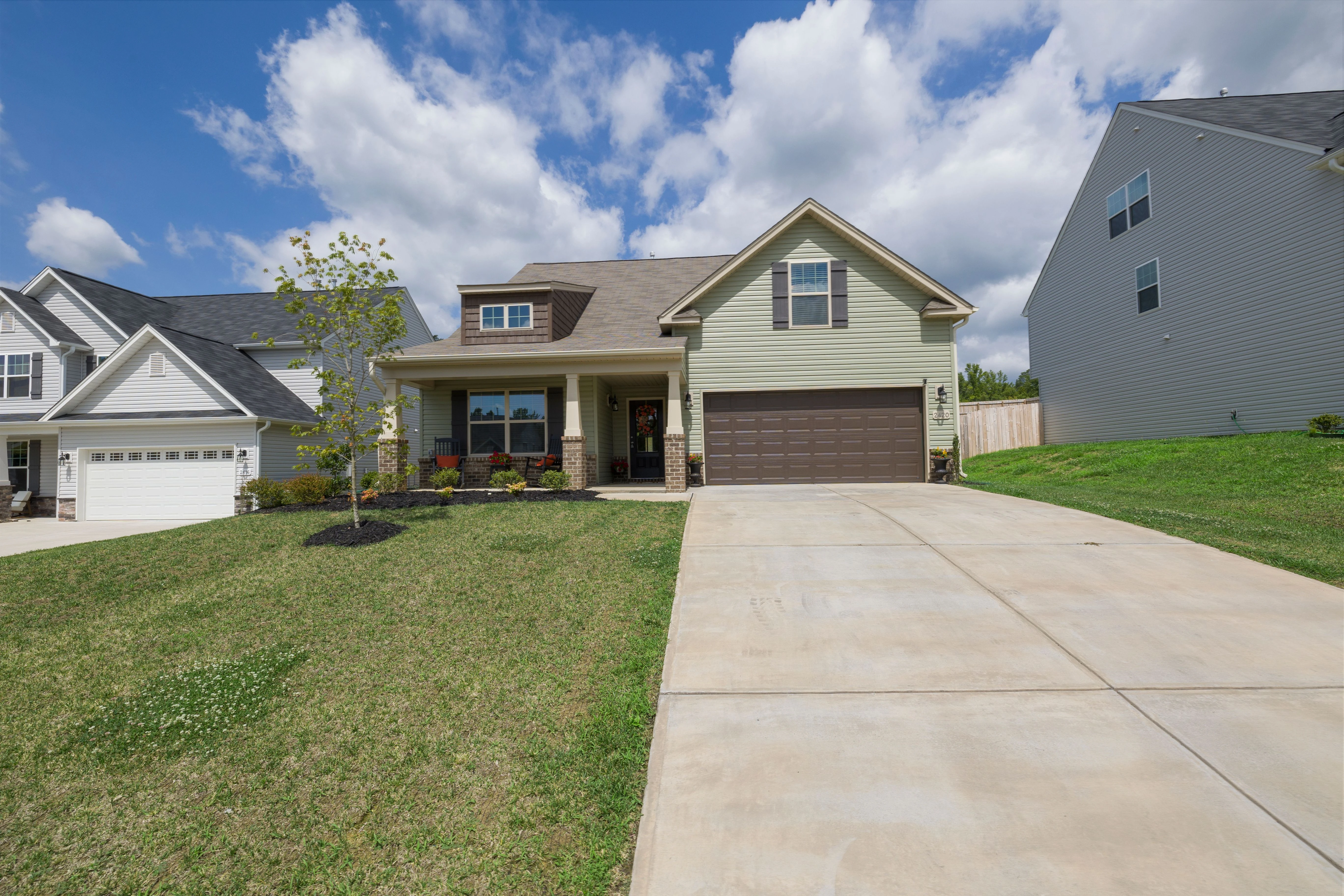
Corinth's housing stock centers on 1997, which puts most doors here squarely in the 1980s-90s wave that covers a lot of this part of the service area.
That means steel sectional doors on torsion springs, sized for two-car and single garages built to that era's rough opening standards, not the older side-hung one-piece doors you'd find in a neighborhood built before 1960.
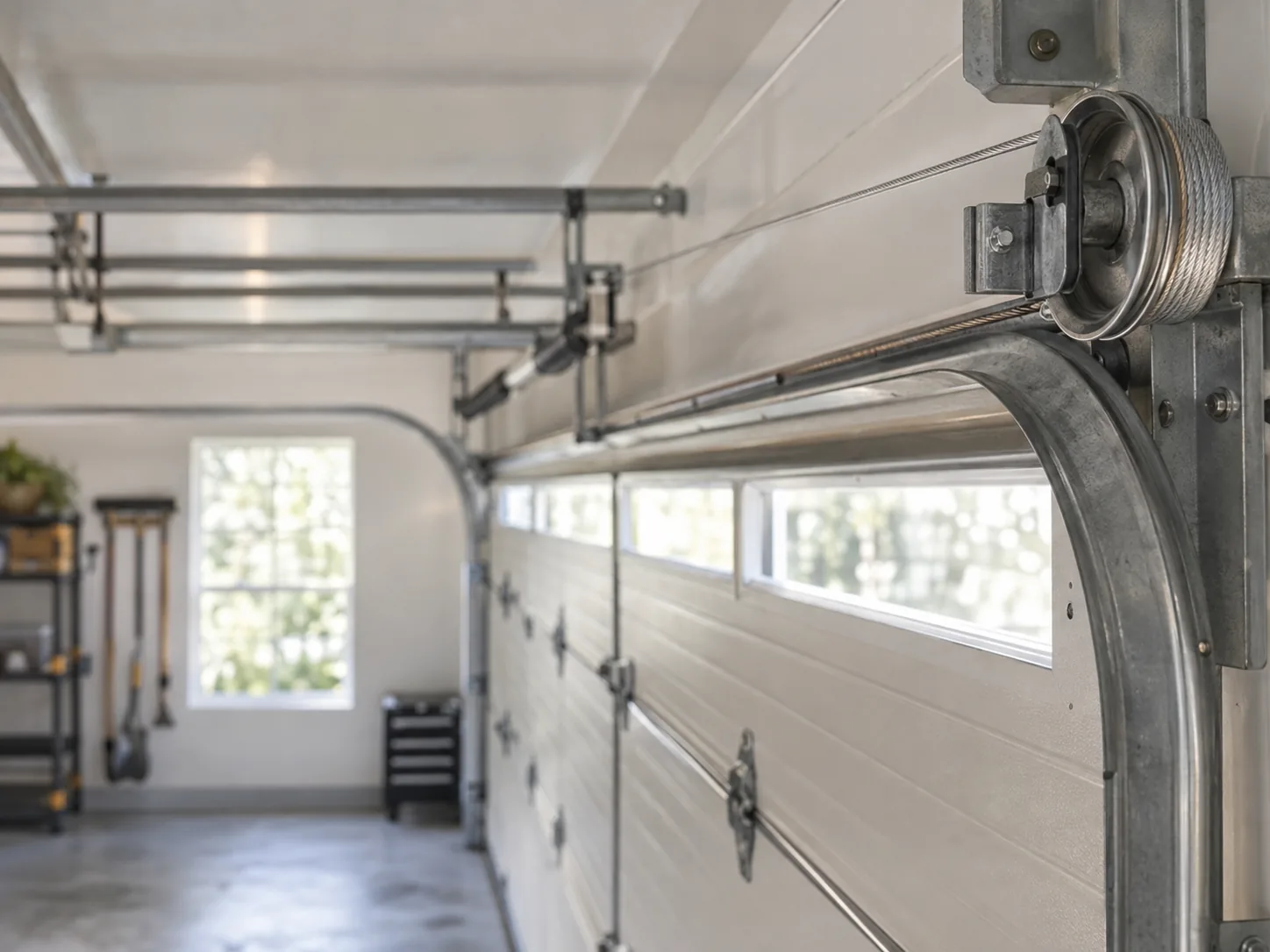
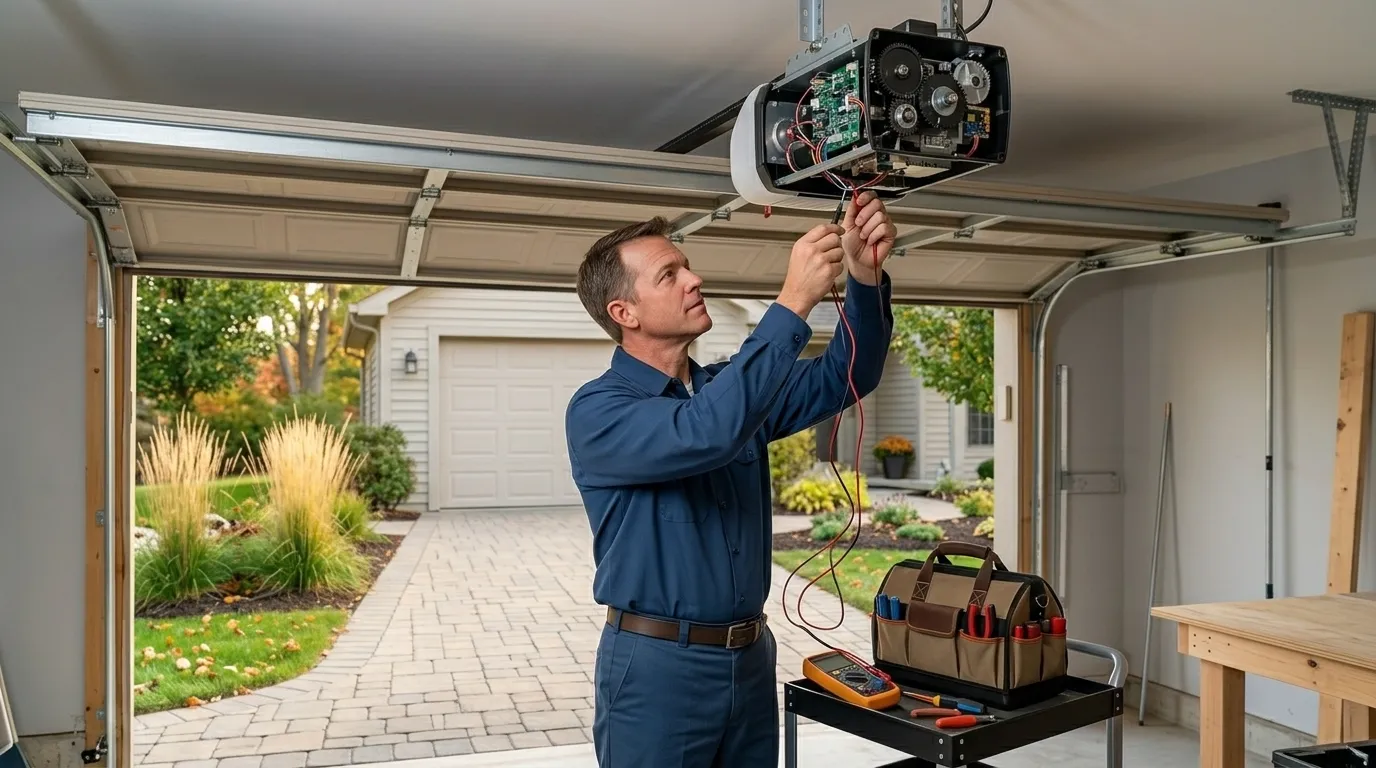
The truck carries torsion springs and drums sized to that range, standard-lift track hardware, and steel and insulated-steel panel sections in the widths that match those builds. Openers from that era are usually chain or belt drive on a 3/4 HP unit, so we stock comparable replacements rather than something oversized for a door this size.
What we don't carry is custom wood carriage-house stock or anything built to a nonstandard opening - those get special-ordered, and that adds lead time we'll tell you about upfront rather than promise a date we can't hit.
Warning signs
The moderate heat band this region sits in means the failure pattern on a door built around 1997 tends to be UV and heat fatigue on weatherstripping and nylon rollers well before rust becomes the main issue, especially compared to wetter climates.
You'll see it as a door that sticks partway on the track in the afternoon, or an opener that strains and reverses on the first try of the day when the garage has baked all afternoon.
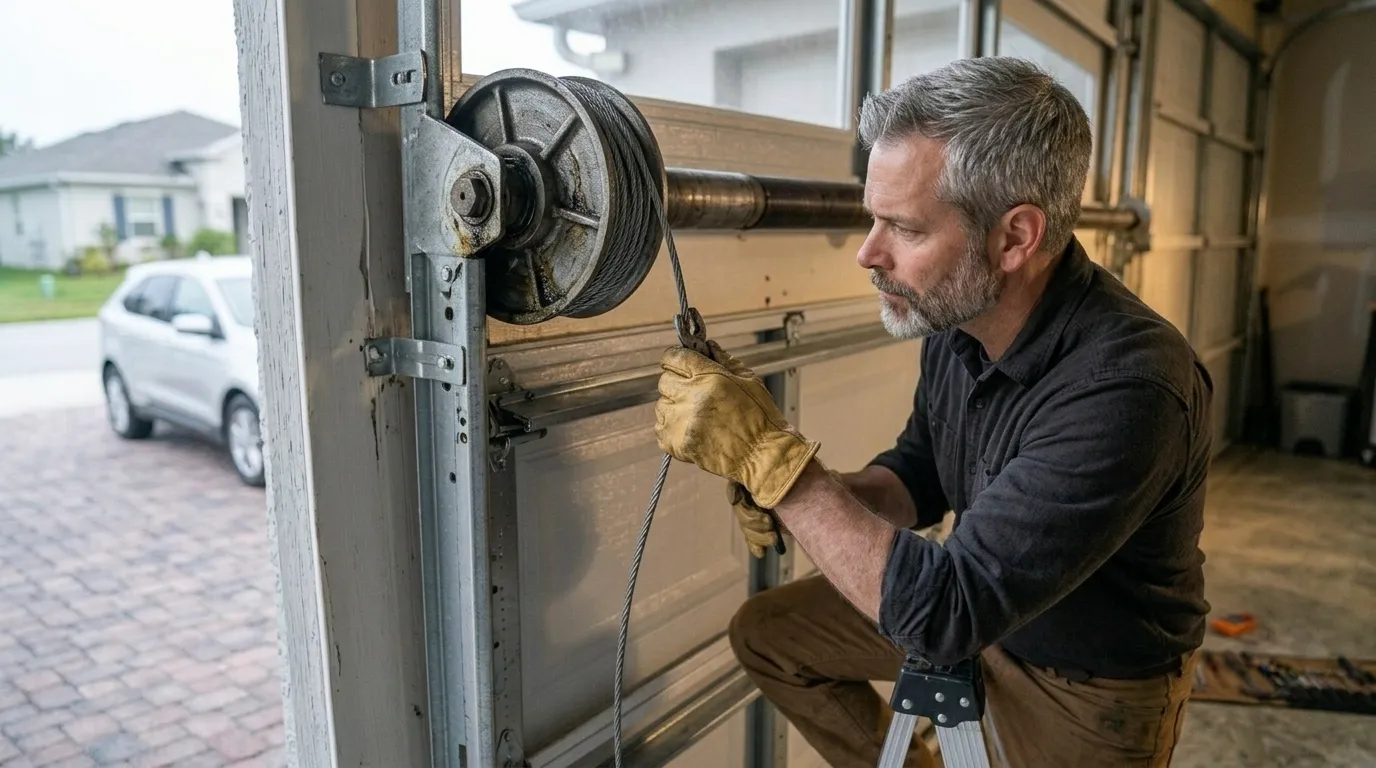
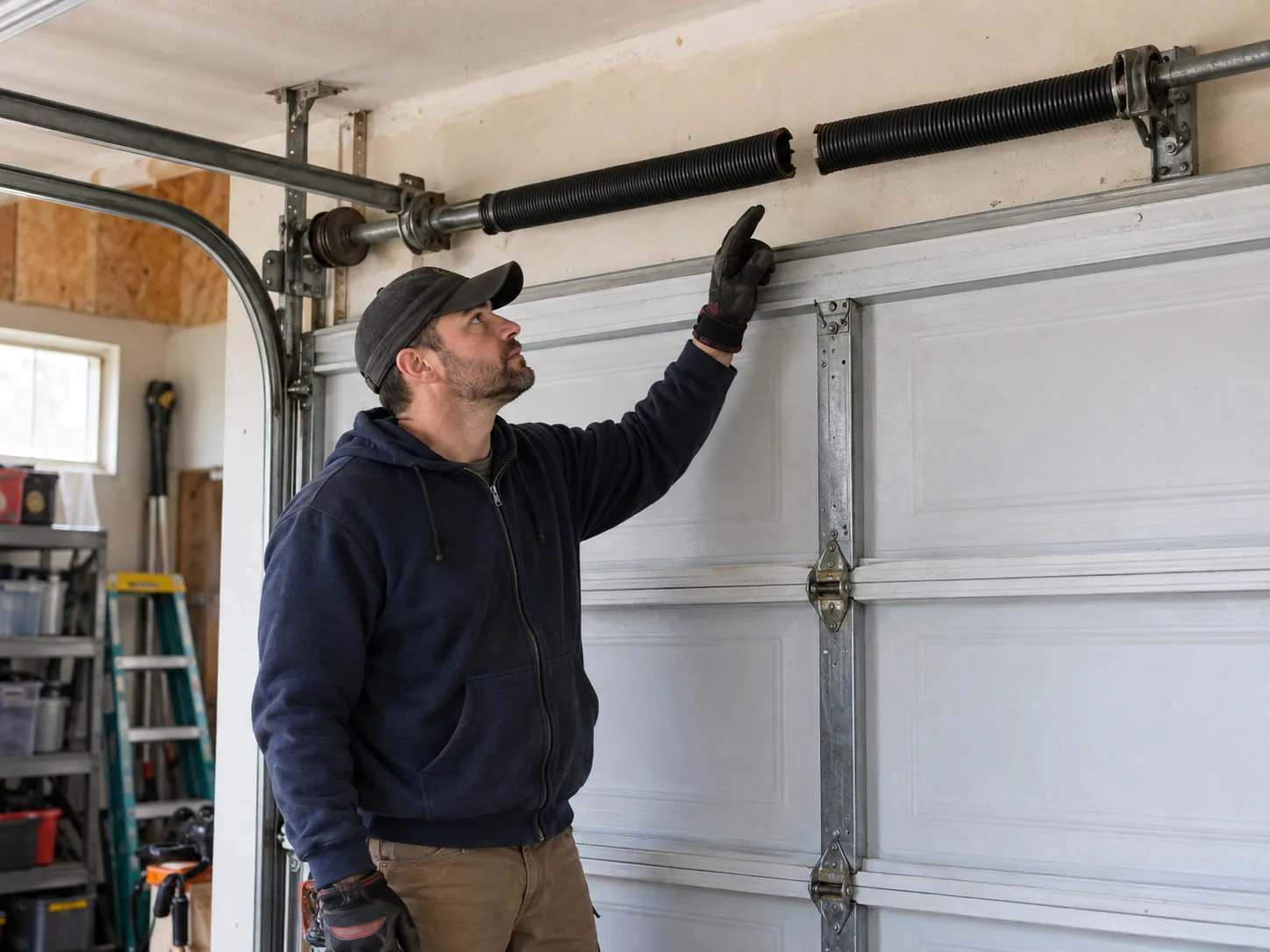
On these builds the torsion spring itself usually has more life left than the rollers or the seal, so a full replacement quote that leads with the spring is worth a second look.
A door this age with a working spring and a tired opener is a different job than a door with a cracked panel and a bent track - the first is a repair, the second starts to look like a straight install.
Our process
For a genuine replacement, we start by confirming the rough opening against the existing frame, since 1997-era construction here is consistent enough that we can usually order to a standard width without a second measuring trip.
We pull the old door and track, set new jamb brackets if the old ones are rusted or stripped, and hang a new torsion system sized to the door weight rather than reusing old springs on a new door - that's a corner we won't cut, since a mismatched spring is the single most common cause of an opener burning out early.
Insulated steel is the standard recommendation given the heat band here; it costs more upfront but keeps the garage from becoming a heat sink that raises the load on whatever's stored or parked next to it.
One honest limit: if the existing header or opening is out of square from settling, that's a carpentry fix outside a straight door swap, and we'll say so rather than force a new door into a bad frame.
Downtime
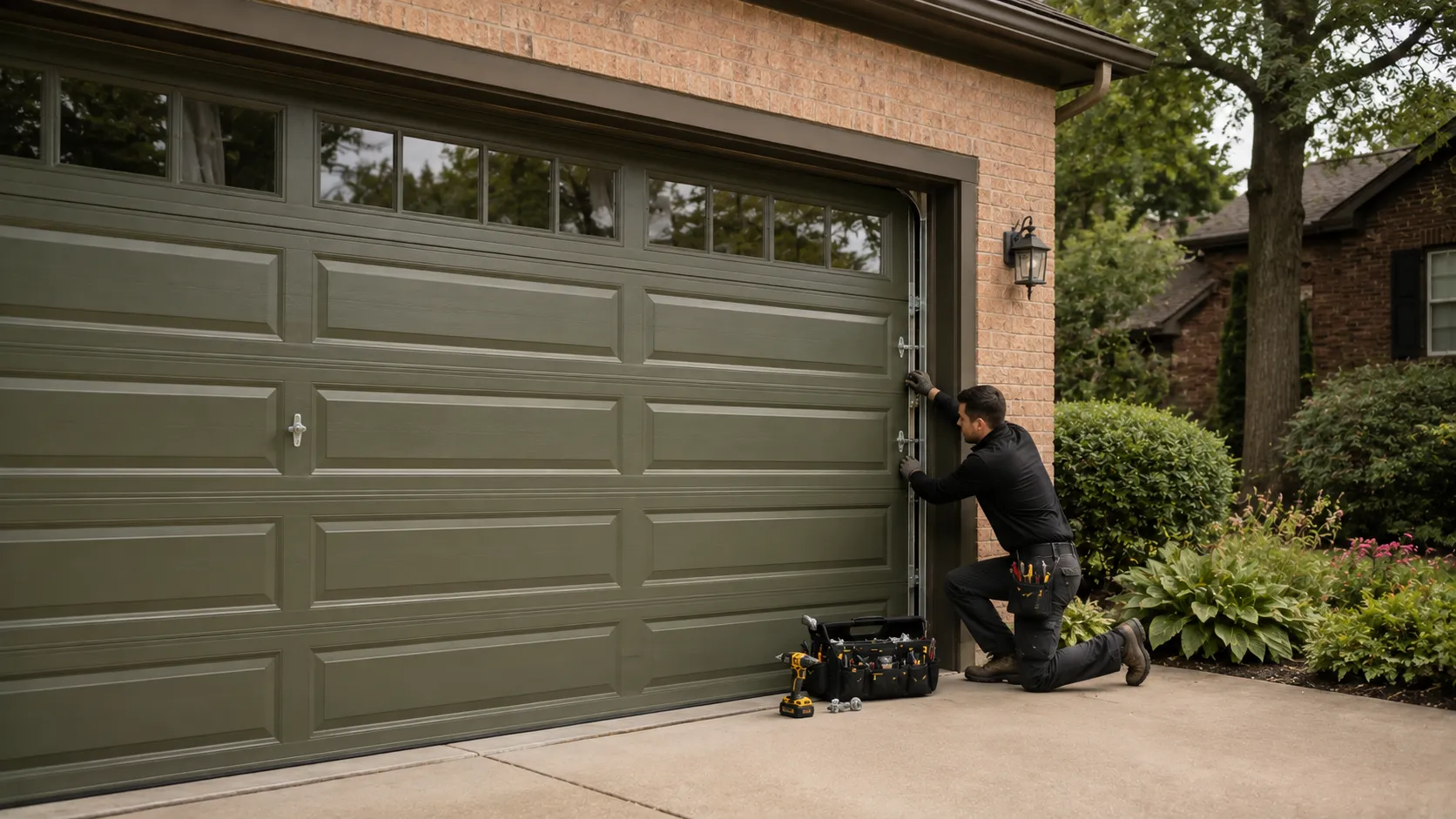
A straight swap on a standard door in this size range is usually a same-visit job once the crew is on site - you're not left with an open bay overnight for a routine install. What extends the timeline isn't the install itself, it's parts. If your opening needs a nonstandard width, or you want a wood-look carriage door instead of steel, that part has to be ordered before the crew ever shows up, and that lead time is set by the manufacturer, not by us. We'll give you a realistic window for that before you commit, rather than a number that sounds better on the phone. Given the 13-mile run from Coppell, we schedule Corinth jobs in blocks rather than one-offs, so the appointment window is the thing to nail down early, not the day-of arrival time.
Watch-outs
The most common surprise on a door from this build era is finding the header framing sized for a lighter door than what the homeowner wants installed - heavier insulated steel or a wood-composite panel can exceed what the original opening and track hardware were built for. We check that at estimate, not at install, so it doesn't turn into a change order on the day. The other issue specific to builds around 1997 is opener compatibility: many still run on a chain-drive unit with wiring and safety sensors that predate current standards, and a new door sometimes needs a new opener even when the homeowner only asked to replace the door. We'll flag that separately rather than bundle it into one price without explanation. What we won't do is install a door heavier than the existing frame can safely carry just to match a homeowner's first choice - that's a case where we'll recommend a lighter option instead.
Questions
Often, yes, especially given the income range typical here - a broken spring or worn roller on a door built around 1997 is usually a repair, not a replacement. Replacement makes more sense when the track is bent, panels are cracked, or the opener and door both need work at once. We quote both at the same visit so you can compare real numbers.
No. We run out of Coppell, about 13 miles away, and schedule Corinth appointments in blocks rather than keeping a local crew or depot here. That means booking windows rather than same-day walk-in service.
Most homes here were built around 1997, which puts them in the standard single and two-car rough openings common to that era. We confirm the exact opening at estimate rather than assuming, since even similar-era homes can vary by builder.
Yes. This area sits in a moderate heat band, and insulated steel keeps the garage from acting as a heat sink that raises strain on anything stored inside, including the opener itself. It costs more upfront than plain steel but pays off over the door's life.
Explore more
Ready when you are
Coppell Garage Door Co repairs and installs garage doors, springs and openers in Coppell, TX and the surrounding area.